
By Ali Badi | Credit Risk Strategist & Founder, The Score Machine Last Updated: June 2026
Meta Description: Learn how to improve your credit score by 100 points fast with proven tactics — from credit report disputes and utilization hacks to authorized user strategies and FICO scoring insights. Real practitioner advice, not generic tips.
You're staring at a 580 on your credit report. Maybe a 620. You need a mortgage approval, a decent auto loan rate, or just a credit card that doesn't require a security deposit.
I've been on the other side of that desk. Years of bank underwriting taught me something most credit guides won't tell you — the people who come in with low scores aren't always bad with money. They're just fighting a system nobody ever explained to them.
Here's the truth from working with real credit files every single day: improving your credit score by 100 points fast isn't a myth. I've watched clients jump from the mid-500s to the high-600s in a single billing cycle. I've seen 620s become 740s in under 90 days.
But it doesn't happen by wishful thinking. It happens when you understand how the FICO algorithm actually scores your behavior, and you attack the highest-impact levers in the right sequence.
This is the exact playbook. Not surface-level advice. Not "pay your bills on time" for the hundredth time. This is the step-by-step strategy I use with real clients — the same framework behind The Score Machine's AI credit analysis.
Understanding How Your FICO Score Is Calculated — The Foundation of a 100-Point Gain
Before you touch anything on your credit report, you need to understand what you're working with. The FICO score — developed by the Fair Isaac Corporation and used by 90% of top lenders in the United States — is calculated from five weighted categories pulled directly from your Equifax, Experian, and TransUnion credit reports.
| FICO Score Factor | Weight | What It Actually Measures | Speed of Impact |
|---|---|---|---|
| Payment History | 35% | On-time vs. late payments, collections, charge-offs, bankruptcies | Slow to build, fast to damage |
| Amounts Owed (Credit Utilization) | 30% | Revolving balances vs. credit limits, installment loan balances | Fastest — updates in one billing cycle |
| Length of Credit History | 15% | Average age of accounts, age of oldest account, age of newest account | Cannot be rushed |
| Credit Mix | 10% | Variety of account types — revolving credit, installment loans, mortgages | Moderate — weeks to months |
| New Credit (Hard Inquiries) | 10% | Number of recent hard pulls, new accounts opened | Moderate — inquiries age off in 12 months |
Source: Experian — What Affects Your Credit Scores | myFICO — How Payment History Impacts Your Score
Here's the critical insight most people miss: you don't need to fix all five categories to improve your credit score by 100 points. You need to dominate the top two — payment history and credit utilization — and eliminate any errors or outdated negative items dragging you down.
Those three moves alone account for the vast majority of fast credit score improvements I see in practice. If you want to understand how these scoring factors evolved from ancient lending principles to modern AI-driven risk models, our history of credit analysis walks through the entire timeline.
Step 1: Pull All Three Credit Reports and Audit Every Line
This is where every credit improvement journey starts. Not next week. Today.
A Federal Trade Commission study found that more than 5% of consumers have errors on their credit reports serious enough to result in worse loan terms. From my experience analyzing hundreds of credit files, that number is conservative. I regularly find wrong balances, duplicate collection accounts, late payments that were actually paid on time, and accounts that don't belong to the consumer at all — a problem called a "mixed file" where the bureaus merge data from two different people.
Where to Get Your Reports
Go to AnnualCreditReport.com — the only federally authorized source for free credit reports from all three major credit bureaus: Equifax, Experian, and TransUnion. Pull all three. Each bureau may carry different information, different balances, and different errors.
You can also check your FICO score through your bank's credit monitoring service or through myFICO.com. But remember — your score is calculated from your report data. Fix the report first. The score follows.
What to Flag During Your Audit
Go line by line and mark anything that looks wrong:
- Late payments that were paid on time — the single most common error I find, and the most damaging to your score
- Accounts you don't recognize — could be identity theft, a mixed file, or a data furnisher reporting incorrectly
- Incorrect balances or credit limits — an inflated balance artificially raises your utilization ratio
- Duplicate collection accounts — the same original debt reported by two different collection agencies
- Accounts showing open that were closed — adds phantom utilization to your profile
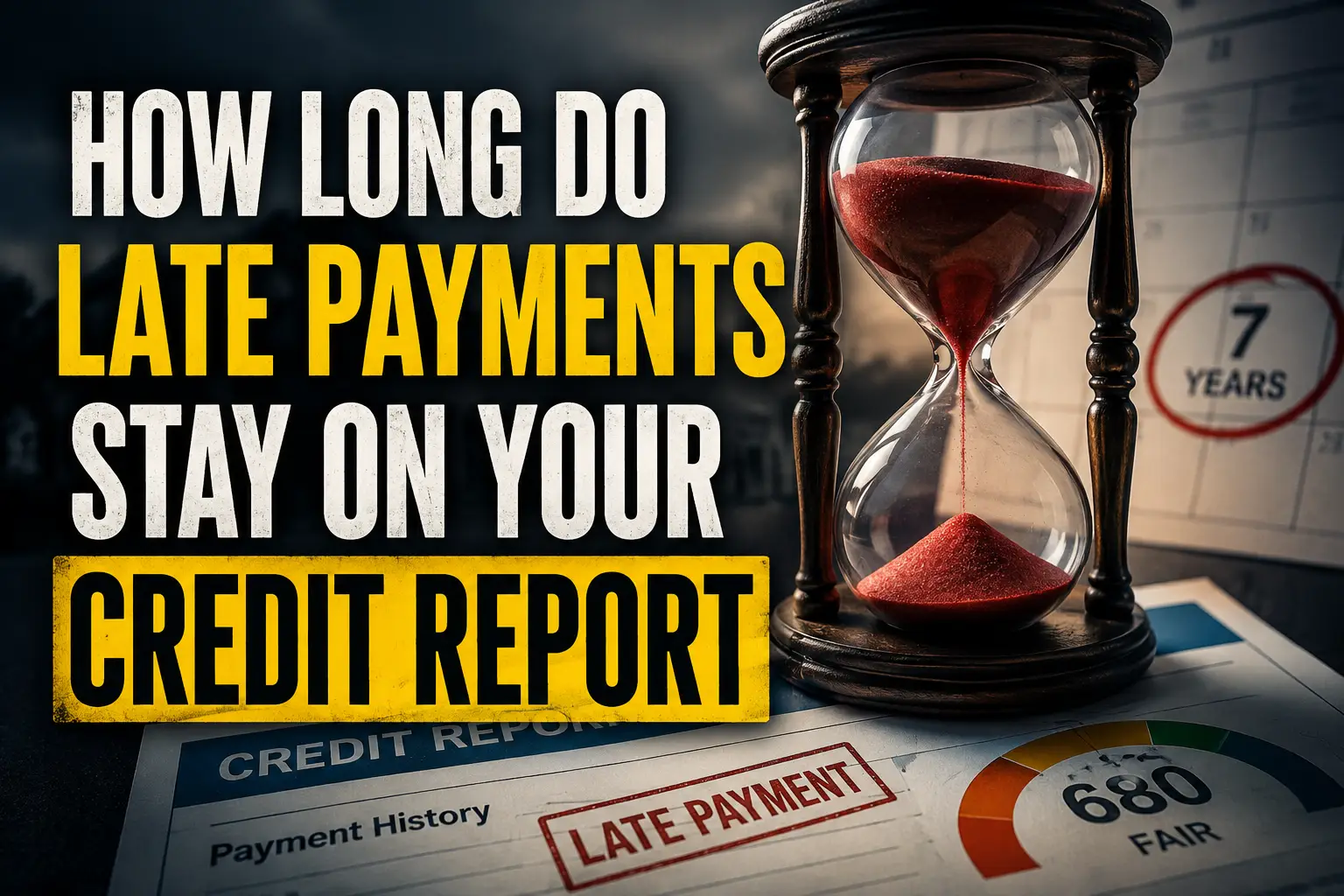
- Incorrect date of first delinquency (DOFD) — this controls when the negative item falls off your report under the FCRA's 7-year rule
- Outdated public records — a satisfied judgment or discharged bankruptcy still showing as active
Based on my experience, late payment misreporting and inflated collection balances are the two most common errors. Either one alone can suppress a score by 40 to 80 points. If you've never pulled your reports before, you might be shocked at what's sitting on there — especially if you've ever had an account go through multiple collection agencies.
For a deep dive into how long negative marks actually stay on your report and when they should fall off, read our guide on how long late payments stay on your credit report.
How to Dispute Errors Under the FCRA
The Fair Credit Reporting Act (FCRA) — specifically Section 611 — gives you the legal right to dispute any information on your credit report you believe is inaccurate, incomplete, or unverifiable. The credit bureaus are required to investigate within 30 days and either verify the information with the original data furnisher or remove it.
File disputes directly with each bureau — Equifax, Experian, and TransUnion. You can do this online, but I recommend certified mail with a return receipt for anything serious. Include specific documentation: bank statements showing on-time payments, letters from creditors, account numbers, and a clear written explanation of what's wrong and why.
The Consumer Financial Protection Bureau (CFPB) maintains an excellent guide on how to dispute errors on your credit report. I reference it with every client.
Most people make this mistake: they file blanket disputes on everything at once with zero supporting evidence. That's a red flag to the bureaus — they'll process it as "frivolous" and nothing moves. Dispute strategically. Start with the items costing you the most points. Be specific. Attach proof.
For the complete step-by-step dispute process including goodwill letter templates and FCRA provision breakdowns, check out our full guide on how to remove late payments from your credit report.
Step 2: Crush Your Credit Utilization Ratio — The Fastest Win Available
If there's one single action that can improve your credit score by 100 points fast, this is it.
Credit utilization — the percentage of your available revolving credit you're currently using — accounts for 30% of your FICO score. And unlike payment history, utilization has no memory. The moment your reported balance drops, your score responds. Often within a single billing cycle — roughly 30 days.
The Data Behind the Numbers
FICO's own research shows that consumers scoring 800 or higher carry an average utilization rate below 7%. Meanwhile, the national average utilization rate climbed to approximately 29% by the end of 2025, and TransUnion data suggests it rose even further — past 36% — by early 2026 as consumers leaned harder on revolving credit amid inflation.
Average credit card debt per American reached $6,360 in 2025, up from $5,900 the year before. Total outstanding credit card balances across the country crossed $1.21 trillion, according to Federal Reserve data. These aren't abstract numbers — they represent real utilization pressure dragging millions of scores down.
Here's how utilization maps to score impact:
| Utilization Range | Score Impact | What I Tell Clients |
|---|---|---|
| 0% (zero reported balance) | Slightly negative | Shows no active credit usage — lenders want to see you can manage credit |
| 1–9% | Optimal | This is where 800+ FICO scores live. The sweet spot. |
| 10–29% | Good | Manageable. You won't see major drag here. |
| 30–49% | Risky | This is where score suppression starts getting noticeable |
| 50–74% | Damaging | Significant point loss. Lenders see elevated risk. |
| 75–100% | Critical | Major score destruction. Approaching maxed-out territory. |
The Utilization Playbook — Exactly What to Do
1. Pay down balances before your statement closing date.
This is the single most misunderstood mechanic in credit scoring. Most credit card issuers report your balance to the bureaus on your statement closing date — not on your payment due date. So even if you pay in full every month, if your statement closes while you're carrying a $4,800 balance on a $5,000 limit, the bureaus see 96% utilization.
Find your statement closing date (it's on your statement or in your online account). Pay your balance down before that date. If your utilization drops from 85% to 8%, you could see a 50 to 80 point jump in a single cycle.
2. Request credit limit increases — without a hard pull.
Call your card issuer and ask for a higher limit. Many issuers — including American Express, Chase, Capital One, and Discover — will do a soft pull to evaluate your request, meaning no impact on your score. If your limit goes from $2,000 to $5,000 and your balance stays at $500, your utilization just dropped from 25% to 10%. Same debt. Dramatically different score.
3. Spread balances across multiple cards.
FICO evaluates both your overall aggregate utilization and your per-card utilization. One card at 80% utilization will hurt you far more than four cards at 20% each — even if the total dollar amount is identical. If you carry balances, distribute them.
4. Don't close old credit cards.
This is one of the most common mistakes I see, and it's one of the reasons I built our credit readiness assessment into the platform. Closing a card eliminates that available credit from your utilization calculation and simultaneously shortens your average age of accounts (which hits your length of credit history, another 15% of your score).
5. Consider a balance transfer to a 0% APR card.
If you're carrying high-interest revolving debt, transferring it to a 0% interest credit card can serve double duty — you stop bleeding interest charges AND you redistribute utilization across a new credit line.
Step 3: Attack Late Payments, Collections, and Negative Marks
Payment history is the single largest component of your FICO score at 35%. One missed payment reported as 30+ days late can crater a clean credit profile by 50 to 100 points. The severity depends on how recent it is, how late it went (30, 60, 90, 120+ days), and how clean the rest of your file was before the delinquency.
Goodwill Letters — Asking for a Courtesy Removal
If you have a single late payment on an otherwise pristine account — maybe you missed one payment during a medical emergency or a job transition — write a goodwill letter to the original creditor. You're not claiming the late payment is inaccurate. You're acknowledging it happened and asking them to remove it as a gesture of goodwill, given your long history of on-time payments.
Does it always work? No. But in my practice, I've seen it work often enough — especially with creditors like American Express, Discover, and certain credit unions — that it's always worth the 15 minutes it takes to write the letter.
Pay-for-Delete Negotiations on Collection Accounts
If you have debts in collections — whether with the original creditor or a third-party debt collector — you can negotiate what's called a "pay-for-delete" agreement. You offer to pay the balance (or a negotiated settlement amount) in exchange for the collection agency completely removing the tradeline from your credit report.
Critical rule: get this agreement in writing before you send a single dollar. A collection account marked as "paid" still sits on your report and — under older FICO models like FICO Score 8 — still damages your score. A deleted collection disappears entirely. Under newer models like FICO 9 and FICO 10T, paid collections are treated more favorably, and VantageScore 3.0 and 4.0 ignore paid collections altogether. But deletion is always better than payment status change.
The Fair Debt Collection Practices Act (FDCPA) governs how collectors can communicate with you. Know your rights before you negotiate. You can request debt validation under Section 809 of the FDCPA, requiring the collector to prove they own the debt and that the amount is accurate.
Rapid Rescore — The Insider Tool for Urgent Deadlines
If you're in the middle of a mortgage application and need your score updated faster than the normal 30-day cycle, ask your loan officer about a rapid rescore. This is a service available through mortgage lenders that expedites the bureau update — typically within 3 to 5 business days — after you've paid down a balance, corrected an error, or resolved a collection.
Rapid rescores aren't available directly to consumers — they go through the lender's credit reporting vendor. But if you're working with a loan officer who understands the process (and our loan preparation guide explains exactly what to prep), it can be the difference between qualifying and not.
Automate Everything Going Forward
Set up autopay on every account — even if it's just the minimum payment. One new late payment while you're actively rebuilding can erase weeks of progress. Your phone has autopay. Your bank has autopay. There's no excuse in 2026 for a missed payment that's simply a scheduling oversight.
Step 4: Become an Authorized User on a Strong Account
This is one of the fastest legitimate credit-building strategies in existence, and most people have never heard of it.
When someone adds you as an authorized user on their credit card, that entire account history — its age, its payment record, its credit limit, and its utilization — gets reported to your credit file. You don't need to use the card. You don't need to possess the physical card. The account's positive history simply appears on your credit report as if it were your own.
The Impact Math
If the primary cardholder has a 10-year-old card with a $20,000 limit, perfect payment history, and 3% utilization — all of that layers onto your credit profile. For someone with a thin file (fewer than five accounts), a short credit history, or a low score, this can add 30 to 50 points in a single reporting cycle.
I've seen authorized user additions do more for thin-file clients than any other single tactic. If you're a young borrower with limited credit history — and Gen Z borrowers saw their average FICO score drop to 678 in 2025, the steepest decline of any generation — this strategy can be a game-changer.
Who to Ask and What to Confirm
Ask a parent, spouse, sibling, or trusted friend with excellent credit and a long-standing, low-utilization card. Be transparent about why you're asking.
Before proceeding, confirm with the card issuer that they report authorized users to all three bureaus. Most major issuers do: Chase, American Express, Capital One, Discover, Bank of America, Citi, and Wells Fargo all report authorized user accounts. Some smaller issuers and credit unions may not.
If your credit file is thin and you're looking for your own accounts to start building independently, our best first credit card guide for 2026 covers secured cards, student cards, and no-credit-history options. And for a deeper look at how secured cards work with higher limits, check out our guide to high-limit secured credit cards.
Step 5: Build Credit Mix With Strategic Account Additions
Credit mix makes up 10% of your FICO score. It sounds minor, but it can be the difference between a 690 and a 720 — and that 30-point gap determines whether you qualify for prime mortgage rates or get pushed into a higher bracket.
FICO wants to see that you can manage different types of credit responsibly:
- Revolving credit — credit cards, retail store cards, home equity lines of credit (HELOCs)
- Installment loans — auto loans, personal loans, student loans, mortgages
- Open accounts — charge cards that require full payment each month
If your entire credit file consists of three credit cards and nothing else, adding a small credit-builder loan through a credit union or a fintech platform can add the installment diversity FICO rewards. These loans typically range from $300 to $1,000 — you "borrow" the money, it's held in a savings account while you make monthly payments, and once paid off you get the funds. The real value is the payment history reported to all three bureaus.
But be strategic about it. Don't open new accounts just for variety if it means unnecessary hard inquiries and new account age drag. Weigh the benefit against the temporary score dip. For most people below 700, the credit mix benefit outweighs the short-term hit.
If your goal is a business loan rather than a consumer mortgage, the credit mix expectations shift — our guide on what credit score you need for a business loan breaks down how personal FICO, business credit scores (Dun & Bradstreet PAYDEX, Experian Business), and the SBA's SBSS score all factor in.
Step 6: Freeze Hard Inquiries — Stop the Bleeding
Every time you apply for credit — a credit card, an auto loan, a personal loan, a store financing offer — the lender pulls your credit report. That's a hard inquiry, and each one can cost you 5 to 10 points.
A single inquiry isn't catastrophic. But if you've been applying for multiple cards, testing pre-qualification offers, and signing up for store financing at every checkout counter, those inquiries compound. FICO does group rate-shopping inquiries for mortgages and auto loans into a single inquiry if they occur within a 14- to 45-day window. But credit card applications don't get this protection — each one counts individually.
If you're trying to improve your credit score by 100 points fast, stop all new credit applications for at least six months. Let your existing inquiries age. Hard inquiries affect your score for about 12 months and fall off your report entirely after 24 months.
Also worth knowing: checking your own credit score or report is a soft inquiry and has absolutely zero effect on your score. Check it as often as you want. Services like Credit Karma (which uses VantageScore 3.0), myFICO, and your bank's credit monitoring all use soft pulls.
Consider a Credit Freeze for Security
If identity theft is a concern — and with data breaches affecting millions of Americans every year, it should be — you can place a credit freeze (also called a security freeze) with each bureau. This blocks new creditors from accessing your report, which means no one can open fraudulent accounts in your name. It's free, it doesn't affect your score, and you can temporarily lift it whenever you legitimately need to apply for credit.
You can also place a fraud alert on your file, which requires creditors to take extra verification steps before approving new accounts. A fraud alert lasts one year and can be renewed.
Step 7: Tackle Debt Strategically — The Snowball vs. Avalanche Decision
If you're carrying multiple debts across credit cards, personal loans, and possibly collections, the order in which you pay them down matters — both for your wallet and your credit score.
The Avalanche Method targets the highest-interest-rate debt first. Mathematically, this saves you the most money over time. If you've got a credit card at 27% APR and another at 18%, avalanche says attack the 27% card first.
The Snowball Method targets the smallest balance first, regardless of interest rate. The psychological wins from eliminating entire accounts build momentum and keep you on track.
My recommendation for credit score purposes: neither, exclusively. Instead, I prioritize based on utilization impact. Pay down whichever card has the highest per-card utilization first — that's the one suppressing your score the most. A card at 90% utilization is doing more damage than a card at 40%, regardless of which has the higher interest rate.
If your debt situation involves a mortgage, the calculus shifts — our article on how to pay off your mortgage faster explains the tradeoffs between extra principal payments and maintaining liquidity for credit health.
The 2026 Credit Landscape — What's Changed and Why It Matters
Understanding the broader credit environment helps you make smarter moves. Here's what's happening right now:
The national average FICO score dropped to 714 as of Spring 2026, according to FICO's Credit Insights report. That's down from 717 in 2024 — marking three consecutive years of decline. This is the first sustained drop in over a decade, breaking a streak that began after the Great Recession recovery.
FICO 10T is being adopted for mortgage lending following a directive from the Federal Housing Finance Agency (FHFA) to Fannie Mae and Freddie Mac. FICO 10T incorporates "trended data" — it doesn't just look at your current balance; it examines your payment behavior over the past 24 months. Are you paying down debt or accumulating it? Consistently paying more than the minimum? 10T rewards that behavior. This model also considers Buy Now Pay Later (BNPL) data when reported, which is a double-edged sword for thin-file borrowers.
VantageScore 4.0 is also gaining adoption, particularly among fintech lenders and credit monitoring platforms. It uses a similar trended-data approach and ignores paid collections entirely — meaning if you negotiate a pay-for-delete and it doesn't get fully removed, you may still benefit under VantageScore-based evaluations.
Credit card balances crossed $1.21 trillion nationally. Average consumer debt rose to $6,360. Delinquency rates on accounts 90+ days past due are climbing — and 14.4% of consumers aged 18 to 29 experienced a 50-point-or-greater score drop year-over-year, largely driven by student loan repayment resumption.
For credit professionals, loan officers, and anyone helping clients navigate this shifting landscape, structured credit analysis tools have never been more essential. That's exactly why we built The Score Machine's credit management suite — to give practitioners AI-driven insight into exactly what's suppressing a client's score and the precise path to fix it.
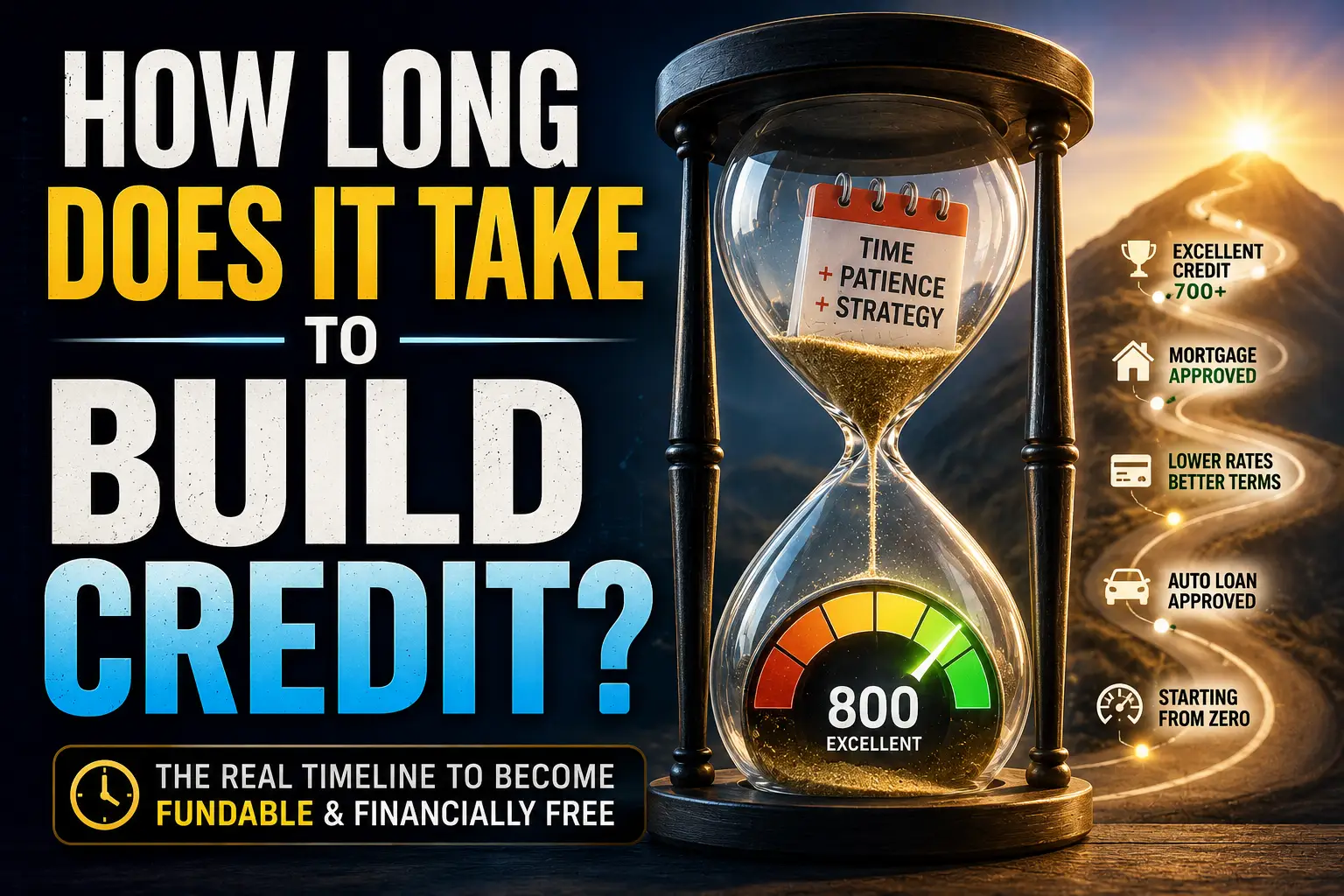
How Long Does It Actually Take to Improve Your Credit Score by 100 Points?
Let me be honest with you — anyone promising overnight results is either uninformed or selling something. But here's a realistic timeline based on hundreds of client outcomes:
| Starting Score | What's Typically Possible | Realistic Timeline |
|---|---|---|
| Below 550 (Poor) | 100+ points if major errors, high utilization, or outdated collections exist | 30–90 days |
| 550–620 (Subprime) | 60–100 points with aggressive utilization management and dispute wins | 60–120 days |
| 620–680 (Fair) | 50–80 points — gains slow as easy fixes get exhausted | 3–6 months |
| 680–740 (Good) | 30–60 points — every point requires precision | 6–12 months |
The lower your starting score, the faster you can move — because there's typically more low-hanging fruit to address. Someone going from 520 to 620 will usually get there faster than someone going from 680 to 780. That's not a flaw in the system — it's how diminishing returns work in any scoring algorithm.
If your target is mortgage readiness, our how to fix your credit to buy a house guide lays out the specific FICO thresholds for conventional, FHA, VA, and USDA loans — plus DTI (debt-to-income ratio) requirements most borrowers overlook. And if you're already shopping for pre-approval, our guide to getting pre-approved for a home loan walks through every step.
Mistakes That Kill Your Progress — What NOT to Do
I've seen all of these destroy a client's credit improvement trajectory:
Closing old accounts to "clean up" your report. This shrinks your available credit (hurting utilization) and can reduce your average age of accounts (hurting credit history length). Unless a card has an expensive annual fee and you're getting zero value from it, leave it open.
Paying only the minimum on high-utilization cards. Minimum payments barely cover interest. Your balance — and your utilization — barely moves. If you can't pay in full, at least target getting each card under 30%, and ideally under 10%.
Ignoring medical collections. Even though major bureaus announced voluntary removal of certain medical debts, compliance is inconsistent. Check whether your medical collection is still reporting. If it is, dispute it or negotiate a deletion.
Applying for "instant approval" credit offers to build credit. Every application is a hard inquiry. Stack five of those in a month and you've just dropped 25 to 50 points — making it harder to get approved for the card you actually need.
Trusting credit repair companies that guarantee results. Under the Credit Repair Organizations Act (CROA), no company can legally guarantee a specific score increase. If someone promises "we'll raise your score 200 points guaranteed," they're violating federal law. The legitimate path is understanding your reports, filing your own disputes (or using a compliant service), and doing the strategic work outlined in this guide.
Complete Entity Reference — Every Organization, Law, and Scoring Model Mentioned
For readers and search engines that appreciate comprehensive entity coverage, here's every institution, regulation, and scoring model referenced in this guide:
| Category | Entities |
|---|---|
| Credit Bureaus | Equifax, Experian, TransUnion |
| Scoring Models | FICO Score 8, FICO Score 9, FICO 10T, VantageScore 3.0, VantageScore 4.0 |
| Federal Agencies | Consumer Financial Protection Bureau (CFPB), Federal Trade Commission (FTC), Federal Housing Finance Agency (FHFA), Federal Reserve |
| GSEs | Fannie Mae, Freddie Mac |
| Federal Laws | Fair Credit Reporting Act (FCRA), Fair Debt Collection Practices Act (FDCPA), Credit Repair Organizations Act (CROA), Truth in Lending Act (TILA), Equal Credit Opportunity Act (ECOA) |
| Industry Data Standards | Metro 2 Format (credit reporting data standard maintained by the Consumer Data Industry Association) |
| Major Card Issuers | Chase, American Express, Capital One, Discover, Bank of America, Citi, Wells Fargo |
| Consumer Resources | AnnualCreditReport.com, myFICO.com, Credit Karma |
| Business Credit | Dun & Bradstreet PAYDEX, Experian Business, FICO Small Business Scoring Service (SBSS) |
| Key Concepts | Credit Utilization Ratio, Debt-to-Income Ratio (DTI), Annual Percentage Rate (APR), Hard Inquiry, Soft Inquiry, Authorized User, Credit-Builder Loan, Secured Credit Card, Rapid Rescore, Goodwill Letter, Pay-for-Delete, Date of First Delinquency (DOFD), Balance Transfer, Credit Freeze, Fraud Alert, Identity Theft, Charge-Off, Bankruptcy (Chapter 7/Chapter 13) |
Frequently Asked Questions About Improving Your Credit Score by 100 Points Fast
Can You Raise Your Credit Score by 100 Points in 30 Days?
It's possible but not typical. The most realistic scenario: someone carrying 85%+ credit card utilization pays it all down before their statement closes, AND has an error corrected or a collection deleted in the same window. Those two combined can absolutely produce a 100-point gain in one billing cycle. For most people, a 30- to 60-point improvement in 30 days is a more realistic — and still very meaningful — target.
What Hurts Your Credit Score the Most?
Late payments (30+ days past due), maxed-out credit cards, accounts in collections, charge-offs, foreclosures, and bankruptcies — roughly in that order of severity. A single 30-day late payment on a previously clean credit card can cost 50 to 100 points. As of 2025, the average FICO score nationally dipped to 713 — the first annual decline since 2013.
What's the Difference Between a Hard Inquiry and a Soft Inquiry?
A hard inquiry occurs when a lender pulls your credit report to make a lending decision — credit card application, loan application, mortgage. Each one can cost 5 to 10 points and stays on your report for 24 months (though it only impacts scoring for about 12). A soft inquiry happens when you check your own credit, when a lender pre-approves you without your application, or when an employer runs a background check. Soft inquiries have zero impact on your score.
Should I Close Old Credit Cards I Don't Use?
Almost never. Old cards with zero balances contribute to your length of credit history (15% of your FICO score) and add to your total available credit (lowering your utilization ratio). Unless a card carries a steep annual fee that outweighs the benefit, keep it open. Use it for a small recurring charge — a streaming subscription, for example — so the issuer doesn't close it for inactivity.
Does Paying Off a Collection Account Improve My Score?
It depends entirely on which scoring model the lender uses. Under FICO Score 8 (still widely used by credit card issuers), a paid collection is treated the same as an unpaid collection — the damage is done. Under FICO 9, FICO 10T, VantageScore 3.0, and VantageScore 4.0, paid collections are either weighed less or ignored entirely. For mortgage lending specifically, the industry is transitioning to FICO 10T — so paying collections matters more now than it did two years ago.
What Is a Good Credit Score in 2026?
A FICO score of 670 or above falls into the "good" range. The complete breakdown of credit score ranges on our blog covers what each tier means for loan approvals, interest rates, and funding eligibility. Here's the quick version:
| Score Range | Rating | What It Gets You |
|---|---|---|
| 800–850 | Exceptional | Best rates, highest limits, premium card access |
| 740–799 | Very Good | Excellent rates, strong approval odds |
| 670–739 | Good | Most products available, competitive rates |
| 580–669 | Fair | Subprime rates, limited options, higher deposits |
| 300–579 | Poor | Secured cards only, highest APRs, frequent denials |
Can Bad Credit Stop Me From Getting a Car Loan?
No — but it will cost you. Subprime auto lending is a massive industry. The question isn't whether you can get approved, but at what interest rate and terms. Our guide on car finance with bad credit breaks down real APR ranges, down payment expectations, and how to use an auto loan as a credit-building tool rather than a debt trap.
Your 100-Point Credit Score Action Plan — Quick-Reference Checklist
| # | Action Step | Expected Impact | Timeline | Priority |
|---|---|---|---|---|
| 1 | Pull all 3 credit reports from AnnualCreditReport.com | Foundation — identifies every fixable issue | Same day | Critical |
| 2 | Dispute inaccurate items under FCRA Section 611 with documentation | 20–80 points per corrected item | 30 days per dispute | Critical |
| 3 | Pay credit card balances below 10% utilization before statement close | 30–80 points | 1 billing cycle | Critical |
| 4 | Request credit limit increases (soft-pull only) | 10–30 points via lower utilization | 1–2 weeks | High |
| 5 | Set up autopay (minimum due) on every account | Prevents future late payment damage | Same day | High |
| 6 | Send goodwill letters for isolated late payments | 20–50 points per successful removal | 30–60 days | High |
| 7 | Negotiate pay-for-delete on collection accounts (get written agreement) | 20–50 points per deleted collection | 30–60 days | High |
| 8 | Get added as authorized user on a strong, low-utilization account | 20–50 points | 1 reporting cycle | Medium |
| 9 | Add a credit-builder loan for installment credit mix | 10–20 points | 30–90 days | Medium |
| 10 | Place a credit freeze if identity theft is a concern | Prevents future unauthorized accounts | Same day | Medium |
| 11 | Stop all new credit card applications for 6+ months | Prevents additional inquiry damage | Ongoing | Medium |
| 12 | Consider balance transfer to 0% APR card if carrying high-interest debt | Saves interest + redistributes utilization | 1–2 weeks | Situational |
The Bottom Line
Improving your credit score by 100 points fast is absolutely possible — but "fast" means 30 to 90 days of focused, strategic work. Not overnight. Not by accident. And not by paying $1,500 to a company that sends the same template dispute letter to every bureau.
The people who get real results are the ones who understand their credit reports inside and out, attack utilization and errors first, and maintain discipline with payment behavior going forward.
I've watched this playbook work for hundreds of clients — from first-time homebuyers trying to qualify for an FHA loan to business owners building the credit profile they need for SBA funding. The math doesn't lie. When you fix the right things in the right order, the scoring algorithm rewards you.
If you want to take the guesswork out of it, The Score Machine can analyze your full credit profile — across all three bureaus — and tell you exactly which levers to pull first. It's the tool I built because I got tired of doing this analysis manually for every client who walked through my door.
Your credit score isn't a permanent judgment. It's a snapshot of your credit behavior right now. Change the inputs. Change the output.
It really is that simple.
Related Reading on The Score Machine Blog:
- How to Improve Your Credit Score Fast in the USA — 2026 Practitioner Guide
- How to Remove Late Payments From Your Credit Report
- How Long Do Late Payments Stay on Your Credit Report?
- What Is a Good Credit Score Number?
- How to Fix Your Credit to Buy a House
- High-Limit Secured Credit Cards
- Best First Credit Card in 2026
- Credit Management Solutions Guide
- Credit Score Needed for a Business Loan
Ali Badi is a Credit Risk Strategist, former bank underwriter, and founder of The Score Machine (thescoremachine.com) — an AI-powered credit analysis platform built for credit consultants, loan officers, and funding brokers. His work focuses on credit readiness, FICO optimization, and institutional funding matching.
Disclaimer: This article is for educational purposes only and does not constitute financial, legal, or tax advice. Individual credit situations vary. Always consult a qualified financial professional for advice specific to your circumstances. The Score Machine is a credit analysis tool and does not provide credit repair services.