
Buying a house is one of the biggest financial milestones you will ever reach. But if your credit score is standing between you and the keys to your front door, you are not alone. Millions of Americans face this exact hurdle every year, wondering how to fix their credit before buying a home.
Here is the good news: bad credit is not permanent. Whether you are a first-time homebuyer with a thin credit file, someone recovering from past financial setbacks, or a renter who has been dreaming about homeownership for years, there is a clear path forward. This guide walks you through every step to improve your credit score for mortgage approval, from understanding what lenders actually look for to the specific actions you can take today.
By the time you finish reading, you will know exactly how to raise your credit score fast, what minimum credit score you need for a home loan, and how to position yourself as a strong borrower in a lender's eyes.
Understanding Why Your Credit Score Matters for a Mortgage
Before you can fix anything, you need to understand what you are fixing and why it matters.
Your credit score is a three-digit number that tells lenders how risky it is to lend you money. When you apply for a mortgage, this number influences everything: whether you get approved, what interest rate you receive, and how much you will pay over the life of your loan.
Even a small difference in your score can cost you tens of thousands of dollars. For example, the difference between a 620 and a 740 score on a $300,000 mortgage could mean paying an extra $200 or more per month. Over 30 years, that adds up to more than $72,000 in additional interest.
Lenders pull your credit reports from all three major bureaus — Experian, Equifax, and TransUnion — and typically use the middle score from those three. Understanding mortgage credit requirements starts with knowing where you stand with each bureau.
What Credit Scores Do Lenders Actually Use?
Most mortgage lenders use FICO scores, not the free scores you see on consumer apps. The scoring models they use are often older versions — FICO Score 2 from Experian, FICO Score 5 from Equifax, and FICO Score 4 from TransUnion. These can differ from the scores you check online, sometimes by 20 points or more. That is why it is important to get a mortgage-specific credit check early in the process rather than relying solely on free monitoring tools.
Know the Minimum Credit Score for Your Loan Type

Different loan programs have different credit score thresholds. Knowing which program fits your situation helps you set a realistic target.
FHA Loans
FHA loan credit score requirements are among the most flexible options available. If your score is 580 or higher, you can qualify with a down payment as low as 3.5 percent. If your score falls between 500 and 579, you may still qualify, but you will need to put down at least 10 percent. FHA loans are a popular choice for first-time homebuyers and people rebuilding their credit because the qualification standards are more forgiving than conventional options.
Conventional Loans
The conventional loan credit score minimum is typically 620, though some lenders may require 640 or higher depending on other factors like your down payment and debt levels. Conventional loans often come with better interest rates for borrowers with strong credit, making them the preferred option once your score crosses into the mid-to-high 700s.
VA and USDA Loans
VA loans have no official minimum credit score set by the Department of Veterans Affairs, but most lenders look for at least 620. USDA loans, designed for rural and suburban homebuyers, also generally require a score of 640 or above for streamlined processing.
What If Your Score Is Below the Minimum?
Buying a house with bad credit is not impossible, but it limits your options and increases your costs. Before accepting a high-interest loan, consider whether spending a few months working on your credit could save you significantly over the long term. The answer is almost always yes.
Step 1: Pull Your Credit Reports and Find Errors
The first concrete action in any credit repair journey is getting your hands on your credit reports. You are entitled to a free report from each of the three bureaus every year through AnnualCreditReport.com. Take advantage of this.
Once you have your reports, go through them line by line. You are looking for anything that does not belong: accounts you did not open, late payments that were actually on time, incorrect balances, or debts that are not yours. Errors are more common than most people realize. Studies have shown that roughly one in five consumers has an error on at least one credit report.
How to Remove Errors from Your Credit Report
When you find an error, you have the right to dispute it under the Fair Credit Reporting Act. Write a formal dispute letter to the bureau reporting the error — Experian, Equifax, or TransUnion — and include copies of any supporting documentation. The bureau is legally required to investigate within 30 days and correct or remove any information it cannot verify.
Be specific in your dispute. Instead of saying "this is wrong," explain exactly what the error is and why it is inaccurate. Reference account numbers, dates, and amounts. The more precise your dispute, the stronger your position.
If the bureau does not resolve the issue to your satisfaction, you can escalate your complaint to the Consumer Financial Protection Bureau or consult with a consumer rights attorney. For people going through credit repair for first-time homebuyers, cleaning up errors is often the fastest way to see a meaningful score increase.
[Internal link opportunity: Link to your credit dispute letter templates or services here.]
Step 2: Improve Your Credit Utilization Ratio
After errors, the next biggest lever you can pull is your credit utilization ratio. This measures how much of your available credit you are currently using, and it accounts for roughly 30 percent of your FICO score.
The math is simple. If you have a credit card with a $10,000 limit and a $3,000 balance, your utilization on that card is 30 percent. Lenders like to see this number below 30 percent overall, and below 10 percent is even better.
Practical Ways to Lower Your Utilization
There are several strategies that work well, and combining them can produce results quickly.
Pay down existing balances. This is the most straightforward approach. Focus on cards with the highest utilization first. If you can make extra payments throughout the month rather than just one payment at the end, your reported balance will be lower when the statement closes.
Request a credit limit increase. If you have been a responsible cardholder, call your issuer and ask for a higher limit. A higher limit with the same balance instantly lowers your utilization percentage. Just make sure the issuer does not require a hard inquiry to process the request.
Keep old accounts open. Closing a credit card removes that credit line from your available total, which can spike your utilization even if your balances stay the same. Unless the card has an annual fee that is not worth paying, leave it open.
Spread balances across multiple cards. Having one card maxed out while others sit empty looks worse to scoring models than spreading modest balances across several cards. If you have the option, redistribute your balances.
Improving your credit utilization ratio is one of the fastest-acting changes you can make because scoring models recalculate every time new balance information is reported.
Step 3: Address Past-Due Accounts, Collections, and Judgments
Negative items on your credit report carry the most weight in pulling your score down. Late payments, collections, charge-offs, and judgments can linger for seven years — but their impact fades over time, and there are things you can do to speed up the process.
Should You Pay Off Collections Before a Mortgage?
This is one of the most common questions in mortgage preparation, and the answer depends on a few factors. Newer scoring models like FICO 9 and FICO 10 ignore paid collections entirely. However, many mortgage lenders still use older scoring models where paying a collection can actually cause a temporary score dip by updating the "date of last activity" on the account.
Here is a practical approach: if the collection is recent and for a significant amount, paying it or negotiating a "pay for delete" agreement — where the collector agrees to remove the item from your report in exchange for payment — is often the best move. If the collection is old and nearing the seven-year mark, it may make more sense to let it age off naturally.
Your lender can also advise you on this. Some mortgage programs require collections to be paid or addressed before closing, regardless of how it affects your score.
Getting Current on Late Payments
If you have accounts that are currently past due, bringing them current should be a top priority. A single 30-day late payment can drop your score by 50 to 100 points depending on your overall profile. The damage is greatest when the late payment is recent, so getting current and staying current from this point forward starts the healing process.
If you have a strong history with a creditor and the late payment was a one-time mistake, consider writing a goodwill letter asking them to remove the negative mark. There is no guarantee this will work, but it costs nothing to try, and many creditors will accommodate loyal customers.
[Internal link opportunity: Link to goodwill letter templates or guides here.]
Step 4: Build Positive Credit History
Removing negatives is only half the equation. You also need to build a track record of responsible credit use. This is especially important for young professionals building credit, self-employed homebuyers who may have thinner credit files, and anyone who has limited credit history.
Best Ways to Build Credit for a Home Loan
Get a secured credit card. If your credit is too low for a traditional card, a secured card lets you put down a deposit that becomes your credit limit. Use it for small purchases, pay the balance in full each month, and you will start building positive payment history immediately.
Become an authorized user. If a family member or partner has a credit card with a long history of on-time payments and low utilization, ask them to add you as an authorized user. Their positive history on that account can appear on your credit report and boost your score. You do not even need to use the card.
Consider a credit-builder loan. Some community banks and credit unions offer small loans designed specifically to help people establish credit. The money you borrow is held in a savings account while you make monthly payments. Once the loan is paid off, you receive the funds. Every on-time payment gets reported to the bureaus.
Report rent and utility payments. Services like Experian Boost, Rental Kharma, and similar platforms can add your rent and utility payment history to your credit reports. If you have been paying rent on time for years, this is free credit history waiting to be captured.
Building positive credit takes consistency more than anything else. There are no shortcuts, but the steps to improve credit for a home purchase compound quickly when you stay disciplined.
Step 5: Get Your Debt-to-Income Ratio Under Control
Your credit score is not the only number lenders care about. Your debt-to-income ratio for mortgage qualification is equally important. This ratio compares your total monthly debt payments to your gross monthly income.
Most lenders want to see a DTI ratio of 43 percent or lower, though some loan programs allow up to 50 percent with compensating factors. Here is how to calculate yours: add up all your monthly debt payments — credit cards, car loans, student loans, personal loans, and the estimated mortgage payment — and divide that total by your gross monthly income before taxes.
How to Lower Your DTI
Pay down debt aggressively. Focus on eliminating smaller debts entirely. Paying off a $200-per-month car loan frees up that entire amount in your DTI calculation, even if the total balance was not especially large.
Avoid taking on new debt. This sounds obvious, but it is a mistake many people make during the mortgage preparation process. Do not finance new furniture, open new credit cards, or co-sign for anyone else's loans while you are preparing to buy a home.
Increase your income. A side job, freelance work, or a raise at your current position all help improve your DTI. If you are self-employed, make sure your tax returns accurately reflect your income — aggressive write-offs can actually hurt you during the mortgage process because lenders use your adjusted gross income.
Consider paying off or consolidating student loans. If student loan payments are a significant portion of your monthly obligations, explore income-driven repayment plans that may lower your monthly payment for DTI calculation purposes.
Your financial readiness for buying a house depends on having both a strong credit score and a manageable DTI ratio. Lenders look at the whole picture.
Step 6: Avoid Common Mistakes During the Mortgage Process
Once you start actively working toward homeownership, there are several pitfalls that can derail your progress at the worst possible time.
Do not apply for new credit. Every new application generates a hard inquiry on your credit report, which can temporarily lower your score by a few points. More importantly, new accounts lower your average account age, which also hurts your score.
Do not make large purchases on credit. Buying appliances, furniture, or a car before your mortgage closes can change your debt ratios and potentially cause your approval to be revoked. Wait until after closing to make big purchases.
Do not change jobs if you can avoid it. Lenders want to see a stable employment history. Switching jobs mid-application raises red flags, especially if you move to a different industry, take a pay cut, or shift from salaried to commission-based work.
Do not move large sums of money without documentation. Large, unexplained deposits in your bank account can delay your closing because lenders need to verify the source of all funds. Keep records of everything — gift letters, sale proceeds, tax refunds, and transfers between your own accounts.
Do not close old credit card accounts. As mentioned earlier, closing accounts reduces your available credit and can increase your utilization ratio. Keep them open, even if you are not actively using them.
These mortgage approval tips may seem like small details, but they trip up countless buyers every year, especially first-time purchasers who are not familiar with how closely lenders scrutinize finances during underwriting.
Step 7: Get Pre-Approved and Know Where You Stand
Once you have put in the work to strengthen your credit, getting pre-approved is the final step before you start house hunting. A pre-approval letter tells sellers you are a serious buyer and gives you a clear picture of how much home you can afford.
Home Loan Pre-Approval Checklist
Before you sit down with a lender, gather these documents:
Your most recent two years of tax returns and W-2s (or 1099s if self-employed). Your last 30 days of pay stubs. Your last two to three months of bank statements for all accounts. A list of all your debts, including balances and monthly payments. Your government-issued identification. If applicable, documentation for any gift funds, divorce decrees, or bankruptcy discharge papers.
Having everything organized shows lenders you are prepared, and it speeds up the process significantly. Remember that pre-approval is different from pre-qualification. Pre-qualification is a rough estimate based on self-reported information. Pre-approval involves an actual credit pull and income verification, making it a much stronger indicator of how to qualify for a mortgage.
[Internal link opportunity: Link to your mortgage pre-approval service or partner lender here.]
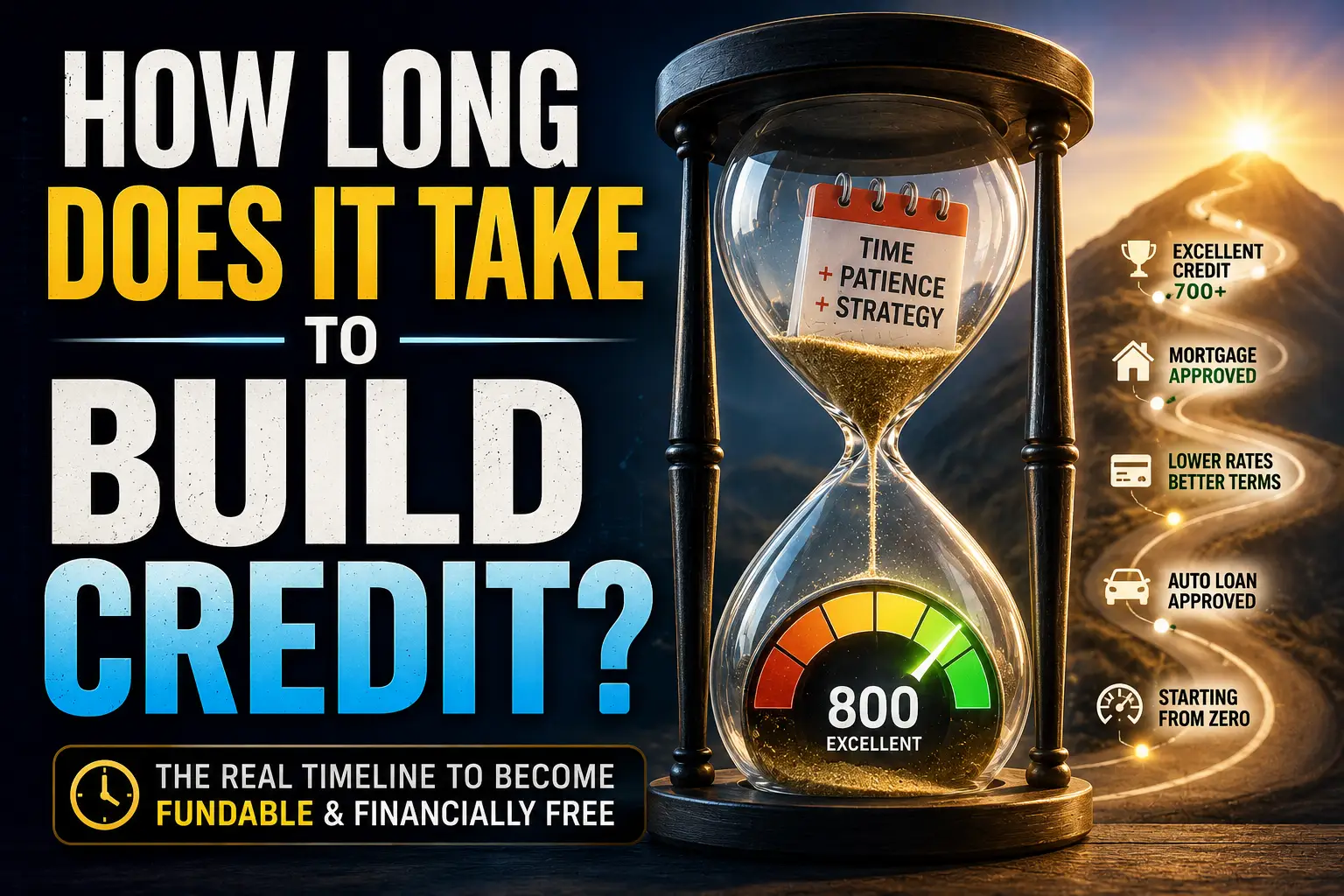
How Long Does It Take to Repair Credit?
One of the most common questions people ask is how long it takes to repair credit before they can buy a home. The honest answer is that it depends on where you are starting and what needs to be fixed.
If your main issue is high credit utilization, you can see score improvements within one to two billing cycles after paying down balances. That could mean a noticeable change in as little as 30 to 60 days.
If you are dealing with late payments or collections, the timeline is longer. Building a consistent track record of on-time payments takes at least six months to start showing meaningful improvement. A bankruptcy or foreclosure will impact your score for years, though the effect diminishes as time passes.
For most people who are actively working on their credit, a window of three to twelve months is realistic for seeing significant improvement. The key is starting now. Every month you wait is a month of positive payment history you could have been building.
Frequently Asked Questions
Can I buy a house with a 500 credit score?
Technically, yes. FHA loans allow scores as low as 500 with a 10 percent down payment. However, finding a lender willing to work with scores this low can be challenging, and you will pay higher interest rates and mortgage insurance premiums. If your score is around 500, spending a few months improving it to at least 580 will open up much better options, including FHA loans with just 3.5 percent down.
How much can my credit score improve in 30 days?
The amount varies based on your specific situation. People who correct major errors on their credit reports or dramatically reduce their credit utilization can sometimes see improvements of 50 points or more within a single reporting cycle. Others may see more modest gains of 10 to 20 points. The biggest short-term gains usually come from paying down credit card balances and having errors removed.
Will checking my own credit score hurt it?
No. When you check your own credit, it counts as a "soft inquiry" and has absolutely no impact on your score. You can check as often as you want without any negative effect. Only "hard inquiries" from lenders when you formally apply for credit can affect your score, and even those typically only cause a small, temporary dip.
Should I hire a credit repair company?
You can do everything a credit repair company does on your own for free. The Fair Credit Reporting Act gives you the right to dispute errors directly with the credit bureaus. That said, if you feel overwhelmed or do not have the time to handle disputes yourself, a reputable credit repair service can manage the process for you. Just be cautious of companies that make unrealistic promises or charge large upfront fees — those are red flags.
Does paying rent help my credit score?
Traditional credit scoring models do not automatically include rent payments. However, you can use third-party services to have your rent payments reported to one or more of the credit bureaus. Programs like Experian Boost can add utility and telecom payments as well. If you have a strong track record of on-time rent payments, getting them added to your reports is a smart, no-cost way to build credit.
Take the First Step Today
Fixing your credit to buy a house is not an overnight process, but it is absolutely achievable with the right plan and consistent effort. Start by pulling your credit reports tonight. Identify any errors that need disputing. Look at your credit card balances and figure out where you can start paying them down. Set up autopay on every account so you never miss a payment again.
Every action you take now moves you closer to the front door of the home you deserve. Whether you are six months away from being mortgage-ready or just beginning to think about homeownership, the best time to start improving your credit is right now.
The path from renter to homeowner is real, and thousands of people walk it every day. You can be one of them.
[Call to Action: Ready to take the next step? Schedule a free credit review and learn exactly where you stand on your journey to homeownership. Our team specializes in helping future homeowners build the credit they need to qualify for the best mortgage rates available.]
Disclaimer
This article is for educational purposes only and does not constitute financial, lending, or legal advice. Mortgage rates, lender requirements, and program terms change frequently — always verify current information directly with the lender and consult a licensed mortgage professional before making a borrowing decision. The Score Machine is not a lender, broker, or affiliate of New American Funding. References to industry data are sourced from Freddie Mac, the Consumer Financial Protection Bureau, the Mortgage Bankers Association, and independent reviewers including Bankrate, NerdWallet, U.S. News, LendingTree, and Yahoo Finance, accurate as of April 2026.