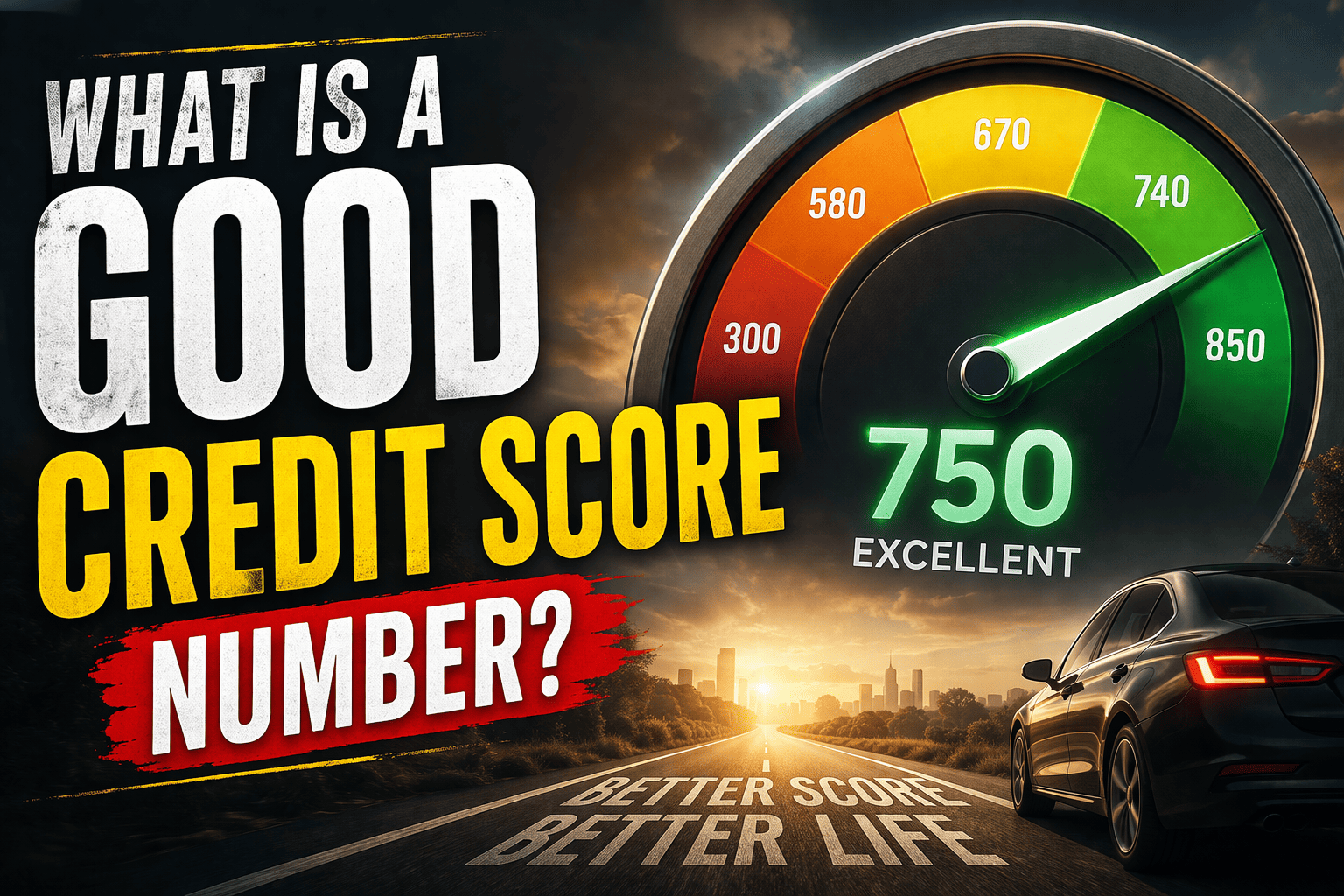
A good credit score is 670 or higher on the FICO scale, which ranges from 300 to 850. Scores between 670 and 739 fall into the "good" tier, while 740–799 is classified as "very good" and 800+ is considered "exceptional." The national average FICO score currently sits at 715, placing the typical American borrower in the good range. But what lenders actually consider "good enough" depends entirely on the credit product, the risk model they use, and how your full financial profile stacks up against their underwriting criteria.
That three-sentence answer is the quick version. The real answer — the one that actually helps you make better financial decisions — requires understanding how scoring models categorize borrowers, why certain thresholds exist, and what those numbers mean in terms of real dollars on your mortgage, auto loan, or credit card.
Let's break it all down.
The Credit Score Scale: 300 to 850, Explained
Every consumer credit score in the United States operates on a numerical scale designed to communicate one thing to lenders: default risk. The higher the number, the lower the probability that a borrower will miss a payment by 90 or more days within the next 24 months.
Both FICO and VantageScore — the two dominant scoring models — use a 300 to 850 range, but they define their tiers differently.
FICO Score Tiers
| FICO Tier | Score Range | Risk Signal |
|---|---|---|
| Exceptional | 800–850 | Lowest default probability; best rates and terms |
| Very Good | 740–799 | Strong history; qualifies for premium products |
| Good | 670–739 | Acceptable risk; approved for most standard credit |
| Fair | 580–669 | Elevated risk; subprime pricing often applies |
| Poor | 300–579 | High default probability; limited options |
VantageScore Tiers
| VantageScore Tier | Score Range |
|---|---|
| Superprime | 781–850 |
| Prime | 661–780 |
| Near Prime | 601–660 |
| Subprime | 300–600 |
In real lending environments, automated underwriting systems use hard cutoffs. A borrower at 669 and a borrower at 670 may have nearly identical financial behavior — but the one-point gap can place them in entirely different pricing tiers. That's why understanding exactly where you fall matters so much.
Internal Link Placement #1: "For a complete view of how risk tiers evolved into the modern system lenders use today, see our guide on the history and evolution of credit analysis."
What Lenders Actually Consider a Good Credit Score in 2026
Knowing your tier is a starting point. Knowing how lenders apply those tiers in today's market is where the real value lies.
As of 2025, the national average FICO score stands at 715, according to Experian's annual consumer credit review. That two-point decline from 2024 ended a decade-long streak without a drop in the national average. The primary drivers, according to FICO's Credit Insights report, include the resumption of student loan delinquency reporting and elevated credit card utilization rates.
But "average" and "good enough for the best rates" are very different benchmarks. Here's what 2026 underwriting standards look like across major credit products:
Minimum Credit Score by Loan Type
| Credit Product | Minimum Score (Typical) | Score for Best Rates |
|---|---|---|
| Conventional Mortgage | 620 | 760+ |
| FHA Mortgage | 580 (3.5% down) | 700+ |
| Auto Loan (Prime) | 680 | 740+ |
| Personal Loan | 580–620 | 700+ |
| Premium Credit Card | 700 | 750+ |
| Business Loan (Bank) | 680 | 720+ |
| SBA 7(a) Loan | 640–680 | 700+ |
The Prime vs. Subprime Divide
The 680 threshold remains one of the most critical dividing lines in 2026 underwriting. Borrowers above 680 are generally classified as prime risks — they receive standard pricing, broader product access, and streamlined approval processes.
Below 680, pricing shifts into subprime territory. Lenders compensate for higher default risk through elevated interest rates, larger down payment requirements, and stricter documentation standards. Based on risk modeling trends, the gap between prime and subprime pricing can exceed 3–5 percentage points on the same product.
How Credit Scores Affect Mortgage Rates (Real Numbers)
Current 30-year fixed mortgage rates are averaging around 6.0%–6.3% for borrowers with strong credit profiles, according to Bankrate's national survey. Here's how those rates shift across score tiers on a $300,000 loan:
| FICO Score Range | Approximate APR | Monthly Payment | Total Interest (30 Years) |
|---|---|---|---|
| 760–850 | ~6.1% | ~$1,820 | ~$355,000 |
| 700–759 | ~6.4% | ~$1,875 | ~$375,000 |
| 680–699 | ~6.6% | ~$1,920 | ~$391,000 |
| 620–639 | ~7.4%+ | ~$2,075 | ~$447,000 |
That's a potential difference of over $90,000 in total interest between the highest and lowest credit tiers — on the exact same property and loan amount.
Internal Link Placement #2: "Mortgage underwriting involves far more than just the score. Our breakdown of key components of credit analysis covers DTI ratios, collateral evaluation, and other factors lenders weigh."
The Five Factors That Determine Your Credit Score
Your credit score is a calculated output — generated from the raw data on your credit reports at Experian, TransUnion, and Equifax. Understanding the inputs is the only way to influence the output.
FICO Score Factor Breakdown
| Factor | Weight | What It Measures |
|---|---|---|
| Payment History | 35% | On-time vs. late payments across all accounts |
| Credit Utilization | 30% | Revolving balances relative to credit limits |
| Length of Credit History | 15% | Age of oldest account + average account age |
| Credit Mix | 10% | Variety of account types (revolving, installment) |
| New Credit Inquiries | 10% | Recent applications for credit |
Payment History (35%): The Make-or-Break Factor
A single 30-day late payment can drop a 780 score by 60–100 points, depending on the rest of the borrower's profile. Late payments remain on your credit report for seven years under Fair Credit Reporting Act (FCRA) guidelines, though their scoring impact diminishes gradually over time.
Creditors report payment status monthly — typically around the statement closing date. A payment made 29 days late usually won't trigger a delinquency flag, but once you cross the 30-day threshold, the missed payment appears on your report and begins affecting your score.
Credit Utilization (30%): The Fastest Lever
Credit utilization is the ratio of your revolving balances to your total available credit. Most scoring models treat utilization above 30% as an elevated risk signal, and anything above 70% as a strong negative indicator.
Here's what many borrowers don't realize: utilization recalculates every time your issuer reports to the bureaus. You can carry high balances mid-cycle and still show low utilization if you pay down before the statement closing date. This makes utilization the single fastest way to move your score — changes can appear within one billing cycle.
Length of Credit History (15%): The Patience Factor
The age of your oldest account, the average age across all accounts, and the age of your newest account all contribute. There are no shortcuts here — this factor rewards consistency over time. Closing your oldest credit card, even if unused, can reduce your average account age and hurt your score.
Credit Mix (10%): Demonstrating Range
Having both revolving credit (credit cards, lines of credit) and installment credit (auto loans, mortgages, student loans) signals broader credit management experience. This factor carries the least individual weight, so taking on new debt purely for diversity isn't advisable — but if you naturally carry multiple account types, it works in your favor.
New Credit Inquiries (10%): The Short-Term Drag
Each hard inquiry can reduce your score by 5–10 points temporarily. Hard inquiries stay on your report for two years but only affect scoring for the first 12 months. Rate-shopping protection groups multiple inquiries for the same loan type (mortgage, auto, student) within a 14 to 45-day window as a single inquiry.
Soft inquiries — like checking your own score or getting prequalified — have zero scoring impact.
FICO vs. VantageScore: Key Differences
One of the most common sources of borrower confusion is seeing different scores depending on where they check. The answer is simple: FICO and VantageScore are separate models with different methodologies.
FICO was developed by the Fair Isaac Corporation and is used in approximately 90% of U.S. lending decisions. FICO Score 8 remains the most widely used version for general lending. FICO Score 10 T is gaining traction for mortgage underwriting in 2025–2026, incorporating trended payment data.
VantageScore was jointly developed by Experian, TransUnion, and Equifax. A key differentiator: VantageScore can generate a score with as little as one month of credit history, while FICO typically requires six months. This makes VantageScore more accessible for thin-file borrowers and credit newcomers.
Both use the 300–850 range, but they weight factors differently. VantageScore puts greater emphasis on recent credit behavior and trended data (whether balances are rising or falling over time), while FICO's traditional models rely more heavily on static snapshots of your current file.
| Feature | FICO | VantageScore |
|---|---|---|
| Developer | Fair Isaac Corporation | Experian, TransUnion, Equifax |
| Score Range | 300–850 | 300–850 |
| Minimum History Needed | ~6 months | ~1 month |
| Used by % of Top Lenders | ~90% | Growing adoption |
| Trended Data | FICO 10 T only | Standard in 4.0 |
A score discrepancy of 20–40 points between FICO and VantageScore models is common. The free score you see on banking apps is often VantageScore 3.0, while the score a mortgage lender pulls may be FICO Score 5 or FICO Score 2 — hence the surprise many borrowers experience during formal applications.
Funding Impact Analysis: How Your Risk Profile Shapes the Deal
Your credit score isn't just a pass/fail gate — it shapes the financial terms of every credit product you access. Below is a side-by-side comparison of how a low-risk and high-risk borrower profile performs across key underwriting metrics.
Risk Profile Comparison Table
| Factor | Low Risk | High Risk |
|---|---|---|
| FICO Score | 740+ | Below 600 |
| Debt-to-Income (DTI) | Under 35% | Above 50% |
| Credit Utilization | Under 30% | Above 70% |
| Late Payments (24 months) | 0 | 2 or more |
| Mortgage APR (approx.) | ~6.0%–6.3% | ~7.5%+ or denial |
| Auto Loan APR (approx.) | ~4.5%–6% | ~12%–16%+ |
| Credit Card APR (approx.) | ~16%–20% | ~26%–30%+ |
The cumulative cost difference over a borrower's lifetime — across mortgages, auto loans, and revolving credit — can easily exceed $150,000 to $200,000. That's the real financial impact of credit risk positioning.
The Business Lending Angle
For entrepreneurs, personal credit scores remain a primary evaluation factor. Traditional banks typically require 680+ for business term loans. SBA 7(a) loans generally need scores in the 640–680 range at minimum, though competitive applications trend toward 700+. Online and alternative lenders may work with scores as low as 600, but at significantly higher APRs — often 15%–35% annualized.
Internal Link Placement #3: "To understand who evaluates creditworthiness beyond traditional consumer lending, explore our guide on who uses credit analysis across industries and roles."
Average Credit Score by Generation (2025 Data)
Understanding where your score sits relative to your peer group provides useful context — though the goal is always to position yourself in the strongest risk tier, regardless of age.
| Generation | Age Range | Average FICO Score (2025) |
|---|---|---|
| Silent Generation | 80+ | 760 |
| Baby Boomers | 61–79 | 747 |
| Gen X | 45–60 | 709 |
| Millennials | 29–44 | 689 |
| Gen Z | 18–28 | 678 |
Source: Experian, September 2025
Scores rise with age for straightforward structural reasons: longer credit histories, more established accounts, and decades of accumulated payment data. Gen Z and Millennials saw slight declines in 2025, driven partly by the resumption of student loan repayment reporting and the end of the SAVE repayment program.
A notable trend from FICO's analysis: the middle score range (600–749) shrank from 38.1% of the population in 2021 to 33.8% in 2025, with consumers increasingly moving toward both the highest and lowest score brackets — a pattern analysts describe as score distribution bifurcation.
How to Improve Your Credit Score Fast: A Priority-Ordered Action Plan
If your score isn't where you need it, the order in which you address the factors matters. Here's a framework organized by speed of impact, based on how scoring models actually weight inputs.
Tier 1: Fast Movers (Results in 30–60 Days)
-
Pay down revolving balances below 30% utilization — ideally below 10%. Time payments before your statement closing date for maximum effect. This is the single fastest way to move your score.
-
Request a credit limit increase without increasing spending. This lowers your utilization ratio immediately without requiring you to pay down debt.
-
Dispute errors on your credit reports. Under FCRA regulations, you're entitled to free reports from each bureau through AnnualCreditReport.com. Incorrect balances, accounts you don't recognize, or late payments that were actually made on time can all be disputed directly with the bureau.
Tier 2: Medium-Term Builders (3–12 Months)
-
Eliminate all late payments going forward. Payment history is 35% of your score. Set up automatic payments for at least the minimum due on every account. A 12-month streak of perfect payments creates meaningful recovery.
-
Become an authorized user on a well-managed account with long history, low utilization, and zero late payments. The account's positive history transfers to your credit report — you don't even need to use the card.
-
Limit hard inquiries. Space out credit applications and only apply when you have a reasonable expectation of approval.
Tier 3: Long-Term Foundation (12+ Months)
-
Keep old accounts open. Even if you don't use them, your oldest accounts anchor your credit history length. An occasional small purchase keeps the account active.
-
Build credit mix naturally. If you only have credit cards, a credit-builder loan or small installment product adds diversity. Don't take on debt just for the mix — let this happen as your needs evolve.
Credit Score Myths and Facts
Misinformation about credit scores can cost you real points — or delay approval when you need it most. Here are the most persistent myths, corrected.
Myth: Carrying a credit card balance improves your score. Fact: It does not. Carrying a balance only increases your utilization ratio and costs you interest. Paying your statement in full each month is the optimal strategy for both your score and your finances.
Myth: Checking your own credit lowers your score. Fact: Self-checking is a soft inquiry with zero scoring impact. The Consumer Financial Protection Bureau (CFPB) actively encourages consumers to monitor their credit regularly.
Myth: Closing old accounts helps your credit. Fact: Closing an old card reduces your total available credit (increasing utilization) and eventually removes a long-standing account from your file (reducing average account age). Unless the annual fee isn't justifiable, keep old accounts open.
Myth: Income affects your credit score. Fact: Scoring models do not factor in income, employment, or bank balances. Your debt-to-income ratio matters to lenders during underwriting, but it's evaluated independently from your score.
Myth: All credit scores are the same number. Fact: You have dozens of credit scores. The free score on your bank's app (often VantageScore 3.0) may differ by 20–40 points from the FICO score a mortgage lender pulls. Different versions weight data differently.
Myth: You need debt to have good credit. Fact: You need active accounts with positive history — not debt. A single credit card used for small purchases and paid in full monthly is enough to build and maintain a strong score.
Credit Score vs. Credit Report: What's the Difference?
These terms are often used interchangeably, but they refer to different things.
Your credit report is the raw data file maintained by each major bureau — Experian, TransUnion, and Equifax. It contains your account history, payment records, balances, inquiries, public records (bankruptcies, liens), and personal identifying information.
Your credit score is a numerical summary calculated from that data using a specific scoring model. The same credit report can produce different scores depending on whether a lender uses FICO Score 8, FICO Score 10, VantageScore 3.0, or any other model version.
Key distinction: You can have errors on your credit report that unfairly drag down your score. Reviewing your actual reports — not just your score — is the only way to catch and dispute inaccuracies. The FCRA guarantees you one free report per bureau per year.
Soft Inquiry vs. Hard Inquiry: Impact on Your Score
| Feature | Soft Inquiry | Hard Inquiry |
|---|---|---|
| Triggered By | Self-checks, prequalification, employer reviews | Formal credit applications |
| Score Impact | None | 5–10 points (temporary) |
| Visible To | Only you | You and future lenders |
| Duration on Report | N/A | 2 years (scoring impact ~12 months) |
Rate-shopping protection: Multiple hard inquiries for the same type of credit product (mortgage, auto, student loan) within a 14 to 45-day window are grouped as a single inquiry. This means you can shop multiple lenders without compounding the impact.
FAQ: Good Credit Score Numbers
What credit score do I need to buy a house?
Conventional mortgages typically require a minimum FICO score of 620. FHA loans go as low as 580 with 3.5% down. For the best rates — currently around 6.0%–6.3% — you'll want a score of 760 or higher. Scores between 700 and 759 will still qualify for competitive rates, though not the absolute lowest available.
Is 700 a good credit score?
Yes. A 700 FICO score falls in the "good" tier (670–739) and is slightly below the 2025 national average of 715. It's strong enough for approval on most standard credit products. However, moving from 700 to 740+ unlocks noticeably better pricing on mortgages and auto loans.
What's considered a good VantageScore?
VantageScore classifies 661–780 as "prime" (good). Scores above 780 are "superprime." Because VantageScore tends to produce slightly different numbers than FICO for the same borrower, a VantageScore of 700 may not equal a FICO of 700 — check which model your lender uses.
How fast can I raise my credit score?
The fastest lever is credit utilization — paying down revolving balances can produce visible improvement within 30–60 days. Recovering from a late payment typically takes 6–12 months of consistent on-time payments. Negative marks like collections or bankruptcies remain on your report for 7–10 years but lose scoring impact well before removal.
Does checking my own credit score hurt it?
No. Checking your own score through any consumer platform, bank app, or free monitoring service is a soft inquiry and has zero effect on your score.
What's the difference between FICO and VantageScore?
FICO is used by about 90% of top U.S. lenders and requires roughly six months of credit history to generate a score. VantageScore can score borrowers with as little as one month of history. Both use a 300–850 scale but weight scoring factors differently, which is why scores may differ by 20–40 points across models.
What credit score do I need for a business loan?
Traditional bank business loans typically require a personal FICO score of 680+. SBA 7(a) loans generally need 640–680 at minimum. Online lenders may accept scores as low as 600, but at significantly higher interest rates. Strong business revenue and collateral can partially offset a lower personal score.
Maintaining a Good Credit Score: Ongoing Best Practices
Building your score is one challenge. Keeping it there is another. Here are the habits that sustain a strong credit profile over time:
- Automate minimum payments on every account to eliminate the risk of accidental late payments.
- Monitor utilization monthly — aim to keep it below 30%, and below 10% if you're preparing for a major application like a mortgage.
- Review your credit reports at least annually through AnnualCreditReport.com. Dispute any inaccuracies immediately.
- Avoid closing old accounts unless the annual fee makes it financially impractical.
- Space credit applications strategically — every hard inquiry costs 5–10 points, and multiple applications in a short window (outside of rate-shopping) can compound the damage.
- Build an emergency fund to reduce the likelihood of relying on credit during financial stress — a primary driver of missed payments and utilization spikes.
The Bottom Line
A "good" credit score isn't a fixed number — it's a risk-tier classification that shifts depending on the credit product, the lender, and the current market environment. In 2026, the national average FICO score hovers around 713–715, and lenders continue to use tiered pricing models where every 20–40 point range produces meaningfully different financial outcomes.
The most valuable insight isn't a specific target number. It's understanding that your credit score is a risk communication tool. The stronger the signal you send — through consistent payment history, low utilization, and a mature credit profile — the better your terms will be when you access credit.
Start with the fundamentals: pay on time, keep balances low, and check your reports for accuracy. Those three habits, maintained consistently, will move your financial trajectory in the right direction regardless of where you're starting today.
For a full framework on how lenders assess credit risk across all dimensions, explore our complete credit analysis guide.
Author
Written by: Ali Badi CEO / Credit Risk Strategist / Funding Analyst
Ali Badi brings over 5 years of hands-on experience in credit analysis, lending risk assessment, and funding strategy. As the founder of The Score Machine, Ali has built a platform focused on demystifying the underwriting mechanics behind approval decisions — translating institutional risk frameworks into actionable guidance for borrowers and business owners navigating the credit landscape.
Disclaimer: This article is for educational purposes only and does not constitute financial, lending, or legal advice. Credit score ranges, interest rates, and lending requirements referenced here are based on publicly available data and general industry standards as of early 2026. Individual lending decisions depend on multiple factors beyond credit score alone. Always consult with a qualified financial professional before making credit or lending decisions.
External Authority Sources Cited
- Experian — What Is the Average Credit Score in the U.S.? (2025)
- FICO — Credit Insights Report: Major Shifts in Consumer Credit (2025)
- Consumer Financial Protection Bureau (CFPB) — Explore Interest Rates
- Bankrate — Current Mortgage Rates (2026)
- AnnualCreditReport.com — Free Credit Reports
Suggested Image Alt Text
- Image 1 (Credit Score Tier Infographic): Alt Text: "Credit score ranges chart showing FICO tiers from poor (300–579) to exceptional (800–850) with color-coded risk levels for 2026."
- Image 2 (Mortgage Rate Comparison Graph): Alt Text: "Bar chart comparing 30-year fixed mortgage APR by credit score tier, showing rate differences from 6.1% at 760+ to 7.4%+ at 620–639."
Technical SEO Summary
| Element | Value |
|---|---|
| SEO Title | What Is a Good Credit Score? Ranges & Tiers (2026) |
| Meta Description | What is a good credit score number? Learn 2026 FICO & VantageScore tiers, lender thresholds, and proven strategies to improve your creditworthiness fast. |
| URL Slug | /blog/what-is-a-good-credit-score-number |
| Primary Keyword | What is a good credit score number |
| H1 | What Is a Good Credit Score Number? |
| Word Count | ~3,500+ |
| FAQ Schema Ready | Yes — 7 questions |
| Internal Links | 3 (History of Credit Analysis, Key Components, Who Uses Credit Analysis) |
| External Citations | 5 (Experian, FICO, CFPB, Bankrate, AnnualCreditReport.com) |
| Target Featured Snippet | First 100 words (answer-first framework) |
| Schema Types | FAQPage, Article, Author |