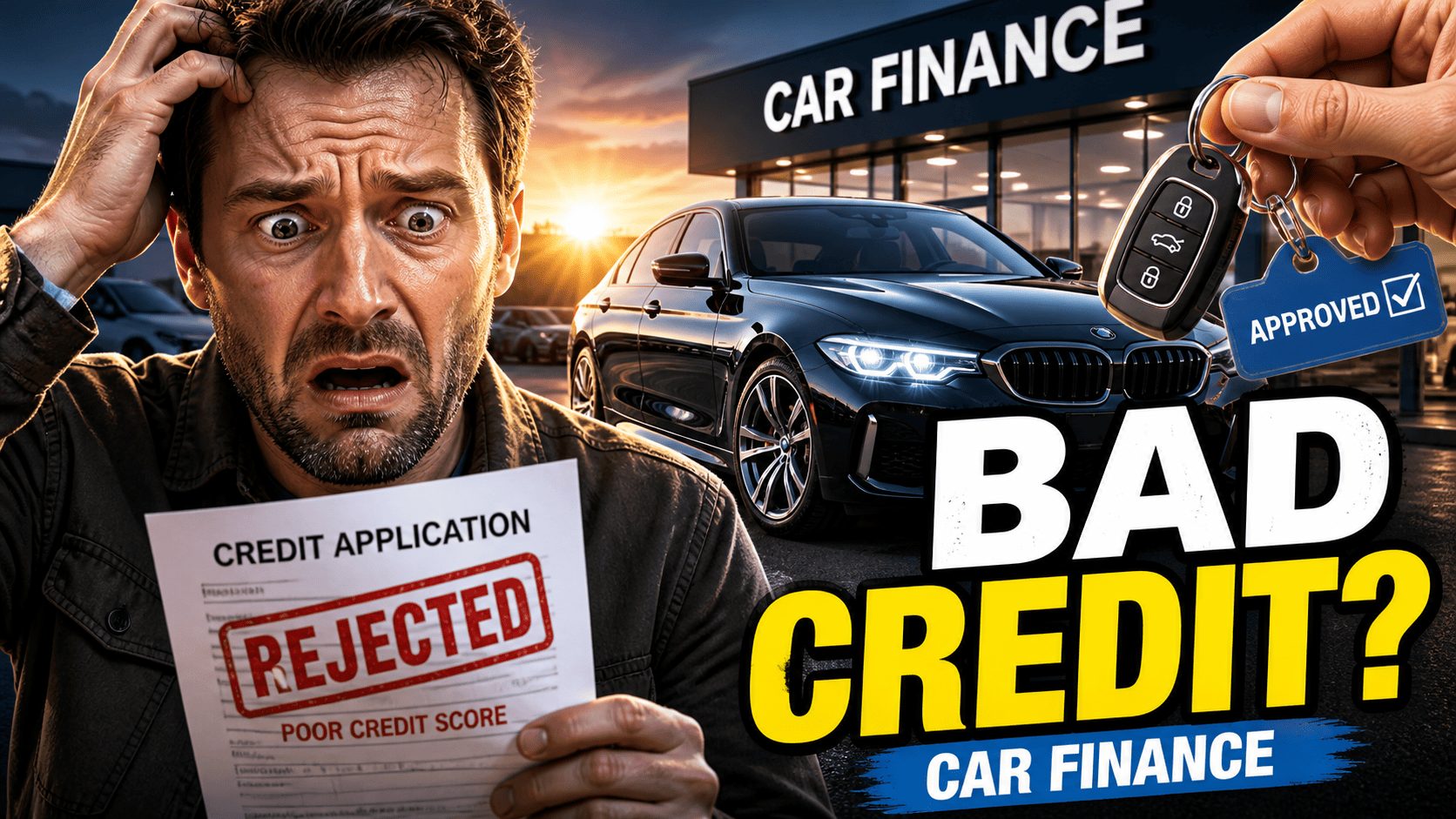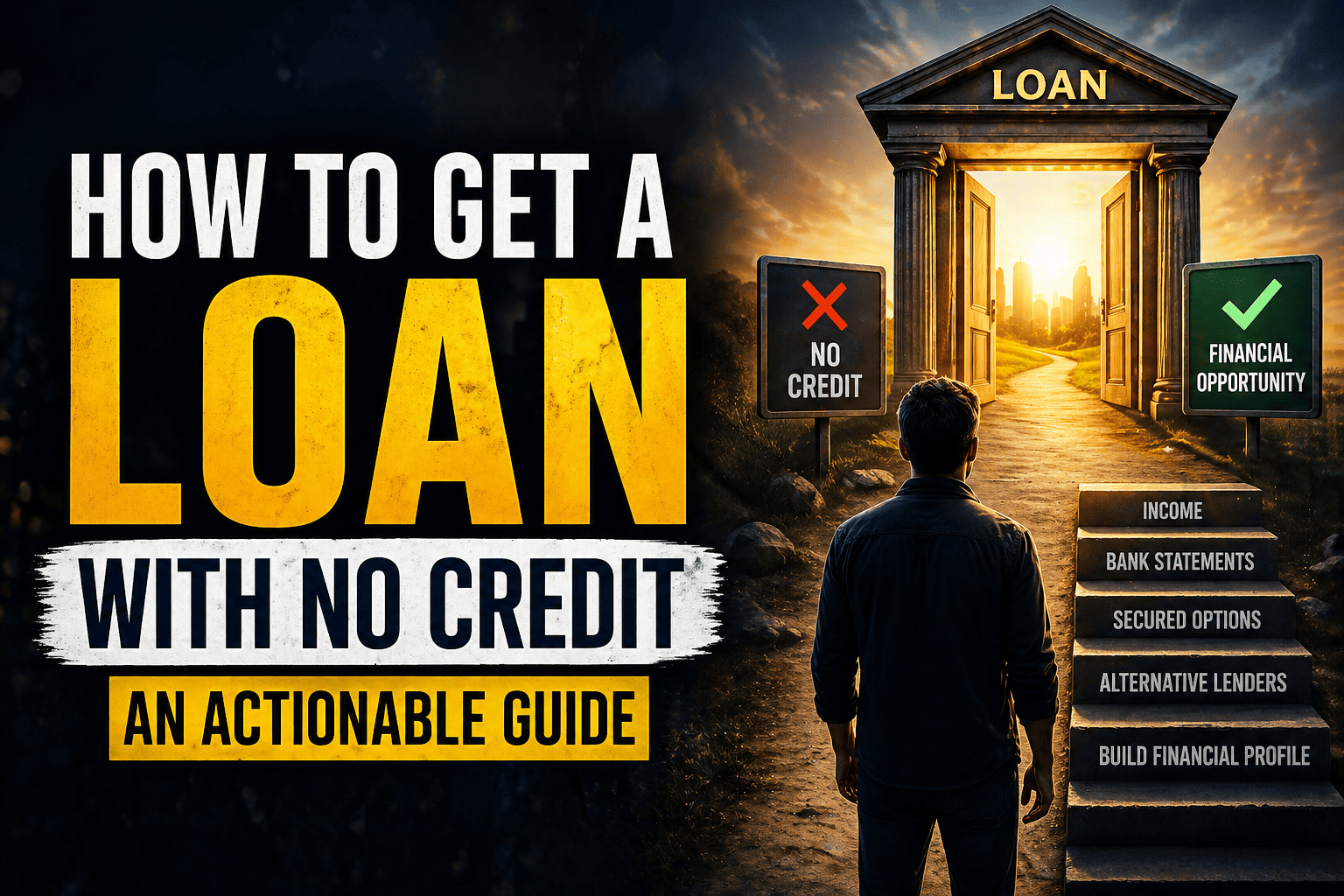
Getting approved for a car loan with bad credit and no money down is possible, but approval depends on income, job stability, documentation, lender type, and vehicle value. This guide explains where to apply, what lenders look for, the real cost of zero-down financing, how to avoid dealer traps, and how to refinance later to rebuild credit.
You need a car. Your credit's rough, and the bank account doesn't have a few thousand dollars sitting in it for a down payment. So the real question is simple: can you actually drive off the lot without putting money down?
Yes, you can. People do it every day. But there's an honest version of this story that the flashy guaranteed-approval ads skip, and you deserve that version before you sign anything.
This is a companion to our complete auto loan guide. Here, we're zeroing in on one thing: getting approved with bad credit and zero cash down.
Can you really buy a car with bad credit and no money down?
It's real, not a myth. Some dealers and lenders work specifically with buyers whose scores sit in the subprime range — roughly 300 to 579 — and even with people who have no credit history at all. (Lenders rank you with the FICO Auto Score, an industry version weighted toward your car-payment history.)
Here's the catch worth knowing up front. When you put nothing down, you borrow the full price of the car plus sales tax, title, and registration fees. So you start the loan owing more than the car is worth, and on a subprime rate that gap costs you. Approval is very possible — our breakdown of zero-down car options walks through how the structure works, and our complete guide to bad credit car loans in 2026 covers the fundamentals. A cheap loan is the harder part.
Where to get approved (and the trade-offs of each)
Not all "yes" answers are equal. Three main channels will take you with bad credit and little or no money down.
Buy here pay here dealerships
These lots sell the car and finance it in-house, so there's no outside bank to reject you. Approval odds are high, and some will work around a tiny down payment. The trade-off: prices and interest tend to run high, and some attach a GPS tracker or starter-interrupt device that can disable the car if you fall behind. If you want to compare lots that specialize in this, start with dealers that accept bad credit near you. Convenient, but usually the most expensive door.
Special-finance dealerships
These are normal dealers with a special-finance department that sends your application to a network of subprime lenders. You get more vehicle choice and, often, better terms than a buy-here-pay-here lot. Some also help with credit rebuilding. Just confirm the financing is fully approved before you drive off — more on why that matters below.
Credit unions and online subprime lenders
This is often the most borrower-friendly route. Credit unions are member-owned and tend to cap their rates lower than dealers — our list of the best credit unions for auto loans is a good place to start. Many online lenders let you prequalify with a soft credit check — a quick look that doesn't ding your score — so you can compare real offers first. It's worth seeing the top bad-credit lenders and their rates before you walk into any dealership.
The smart move is to compare across at least two channels. Every lender has different rules for down payments and rates, so shopping around can reveal a wide range of terms — don't just take the first offer. The FTC's car-buying guidance is a solid neutral primer on comparing financing.
What lenders look at when your credit is weak
A low score doesn't tell your whole story, and lenders who do this work know it. When your credit is thin, they lean harder on everything else:
- Proof of income — recent pay stubs or bank statements showing you can cover the payment
- Debt-to-income ratio (DTI) — how much of your monthly income already goes to debt
- Job and residence stability — time at your job and address signals reliability
- References — names and numbers of people who can vouch for you
- Credit profile details — your payment history, credit utilization, and credit mix still matter, even in the subprime tier
Two things can swing a borderline "no" into a "yes." A cosigner (or co-borrower) with solid credit shares responsibility for the loan, which lowers the lender's risk and can erase the down payment requirement. A trade-in can act as your down payment — if your current car appraises high enough, that equity covers the cash a lender wants. Both are legitimate ways to reach zero out of pocket. For more on how lenders weigh all of this, see our practical guide to buying with bad credit.
What "no money down" really costs you
This is where honesty matters. With bad credit, your APR will be a lot higher than the rates you see advertised for prime buyers — sometimes several times higher, per Experian's tier data. Stretch that over a longer 60- or 72-month term to shrink the monthly payment, and the amortization schedule front-loads interest, so you pay a large amount over the life of the loan.
No down payment makes it worse in one specific way: negative equity. A car loses value the moment you drive it off the lot, and with nothing down, your loan-to-value (LTV) ratio starts above 100% — your balance drops slower than the car's value. For a while you owe more than it's worth ("upside down"). If you need to sell or trade early, you're stuck covering the difference, and if the car is totaled or repossessed you can be left with a deficiency balance — which is exactly why GAP insurance is worth considering on a zero-down deal.
None of this means don't do it. It means know the number that matters: the total cost of ownership, not just the monthly payment. And if you can scrape together even $500, do it — lenders often read a small down payment as a sign of responsibility, and it can improve your approval and your rate.
If a purchase loan looks too pricey right now, two alternatives are worth a look: leasing with bad credit can mean lower monthly costs, and in some cases a personal loan gives you more negotiating power as a cash buyer.
The traps to watch for (the part most guides skip)
A few practices target people in exactly your situation. Spotting them protects your wallet.
Yo-yo financing / spot delivery. You sign, drive home happy, then days later the dealer calls saying your financing "fell through" and you need to come back and re-sign at a worse rate. The first contract is generally binding, and dealers can't simply cancel it because they found a better deal for themselves. Protect yourself by getting your own financing first, or by refusing to leave until the financing is fully and finally approved in writing — not "conditional." Buyers with credit under 680 are advised to get preapproved to avoid spot-delivery problems and to ask for written confirmation from the finance company (more on yo-yo financing).
Predatory add-ons and rate markup. Watch for vague contracts, blank fields, or an APR that isn't clearly stated, plus dealer reserve — the markup a dealer adds on top of the rate the lender actually approved. Federal law (the Truth in Lending Act, implemented through Regulation Z) requires lenders to disclose your APR, finance charge, and total of payments. The CFPB's auto-loan resources explain those disclosures — read those numbers before you sign.
How to get approved, step by step
- Check your credit report. Pull it free and dispute any errors with the bureaus — corrections can nudge your score and your rate. Our credit analysis for car finance shows how to read your file like an underwriter.
- Prequalify with a soft pull. Get real numbers from a couple of lenders or credit unions without hurting your score. Our guide on how to get pre-approved the smart way shows the order to do this in.
- Gather your documents. Pay stubs, proof of address, references, and ID speed everything up.
- Set a budget first, then shop. Decide the monthly payment you can truly afford before you fall for a car.
- Get it in writing. Confirm the financing is final and the APR matches what you agreed to.
After you buy: refinance and rebuild
A high-rate loan doesn't have to be forever. Every on-time payment builds your credit history, and an auto loan adds positive variety to your credit mix. After roughly a year of steady payments — and a better score — you can often refinance your loan with bad credit into a lower rate and cut your interest. Used right, this loan becomes a credit-rebuilding tool, not just a car payment.
The honest bottom line: needing a car with bad credit and no money down is a solvable problem. Get approved through the right channel, watch the total cost, dodge the traps, and turn it into a stepping stone. For the full picture on every loan type and term, head back to our complete auto loan guide.
Key Terms to Know (Quick Glossary)
| Term | Plain-English meaning |
|---|---|
| APR | Your total yearly borrowing cost — interest plus fees. Compare this, not the monthly payment. |
| Subprime / deep subprime | Credit tiers roughly 501–600 and below 500; higher risk, higher rates. |
| FICO Auto Score | The industry score (range 250–900) lenders use for car loans, weighted toward auto-payment history. |
| LTV (loan-to-value) | What you owe ÷ what the car is worth. Zero-down starts you above 100%. |
| Negative equity / upside down | Owing more than the car is worth. |
| Deficiency balance | What you still owe after a totaled or repossessed car is sold for less than the loan. |
| GAP insurance | Covers the gap between your loan balance and the car's value if it's totaled. |
| Dealer reserve | The rate markup a dealer adds on top of the lender's approved rate. |
| Yo-yo financing / spot delivery | A dealer recalls a "done" deal days later to re-sign you at worse terms. |
| Trade-in equity | Positive value in your current car that can stand in for a cash down payment. |
Frequently Asked Questions
What credit score do I need for a no-money-down car loan?
There's no hard cutoff. Many subprime lenders and buy-here-pay-here lots approve scores in the 300–579 range, and some take no credit at all — they just weigh income and stability more heavily.
Do buy here pay here dealerships require a down payment?
Often a small one, but some work with little or nothing down, and a few offer layaway-style plans on the down payment. Expect higher prices and rates in exchange for easy approval.
Will a no-money-down loan have higher interest?
Yes. Bad credit already means a higher APR, and putting nothing down increases the amount you borrow, so you pay more interest overall. Focus on the total cost, not just the monthly figure.
Can I get approved after a repossession or bankruptcy?
Usually, yes. Lenders who specialize in second-chance financing approve people with past repossessions or bankruptcies, especially if the issue is older and your income is steady now.
Do I need a cosigner?
Not always, but one helps. A cosigner with strong credit lowers the lender's risk, can remove a down payment requirement, and may lower your rate. They're legally responsible if you miss payments.
Can I use my trade-in instead of cash?
Yes. If your current car's value covers what the lender wants down, the trade-in equity can serve as your down payment, getting you to zero out of pocket.
Can I get a loan with no proof of income?
It's very hard. Income is the main thing lenders rely on when your credit is weak. Most will need pay stubs or bank statements; some accept alternative proof for self-employment.
Will applying hurt my credit?
Prequalifying with a soft pull won't. A formal application triggers a hard inquiry, which dings your score slightly. Do your shopping within a short window so it counts as one rate-shopping event.
Is no money down a good idea if I have bad credit?
Sometimes it's the only way to get a needed car, and that's fine. But if you can put even a little down, you'll likely get a better rate, a smaller balance, and less time spent upside down.
Sources & References
- Experian — State of the Automotive Finance Market
- Consumer Financial Protection Bureau — Auto Loans
- Federal Trade Commission — Buying a Car
- myFICO — Understanding Credit Scores
- New York Fed — Household Debt & Credit
This article is for general education, not financial advice. Rates and approval vary by lender and situation — verify current terms before you sign.