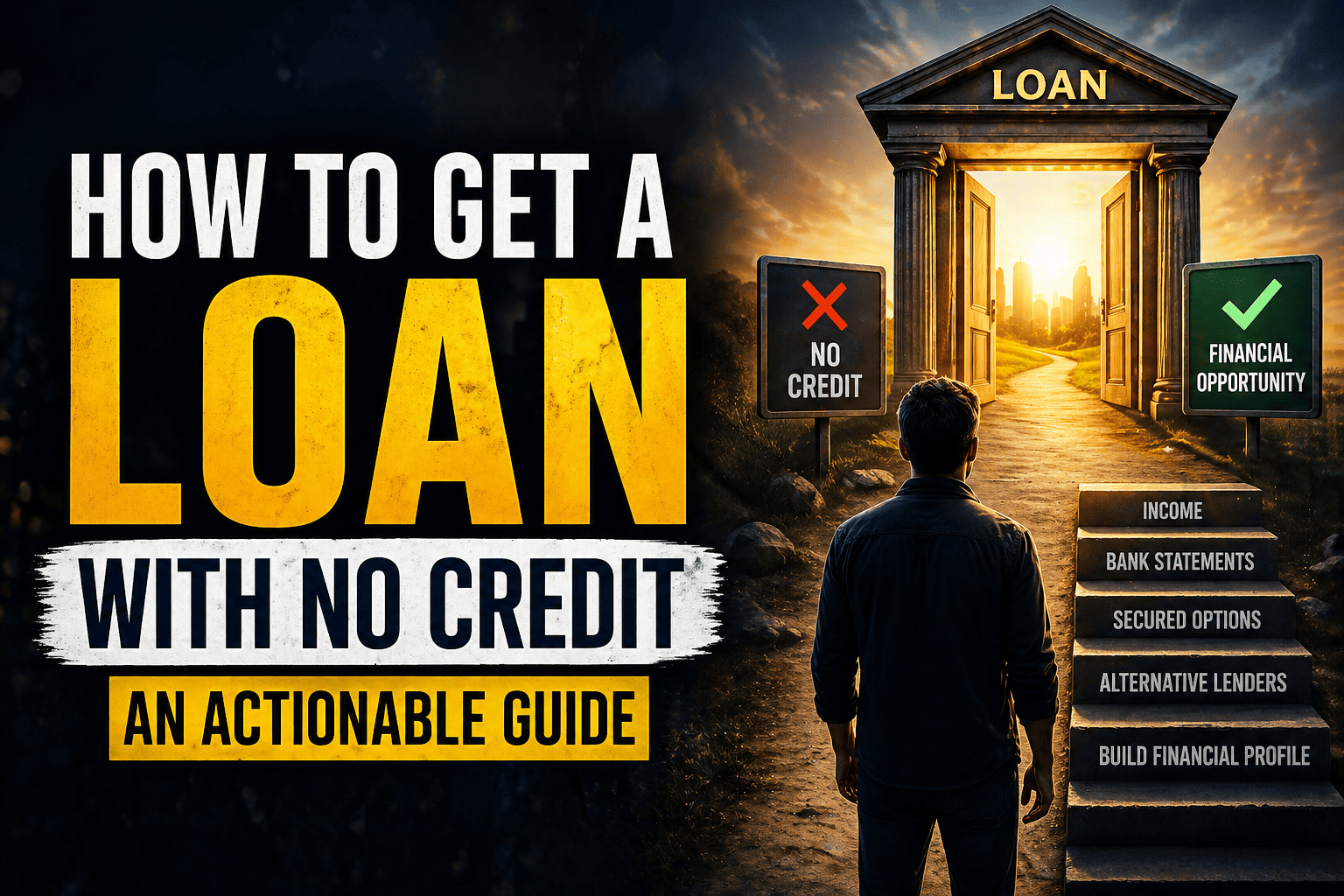

Getting an auto loan with bad credit is possible — but what you don't know about the approval process will cost you thousands. Lenders like Capital One Auto Finance, Carvana, CarMax, Autopay, and iLending work with borrowers across every credit tier, including deep subprime. The real challenge is understanding how to navigate the process, avoid predatory traps, and position yourself for the most favorable terms available given your credit score.
This guide covers the core of what you need to know. For a complete walkthrough of every stage of vehicle financing — from application to payoff — see our complete auto loan guide for 2026. The sections below focus specifically on borrowers dealing with damaged or limited credit histories.
Key Takeaway: There is no universal minimum credit score required to finance a vehicle. What changes with a lower score is the interest rate and the terms — not necessarily your ability to get approved. Knowing the difference is the first step toward making a smarter borrowing decision.
What the Data Actually Shows: The State of Subprime Auto Lending in 2026
Before diving into tactics, it helps to understand the landscape you're operating in. The numbers tell a nuanced story — one that's more favorable to bad credit borrowers than most people assume.
According to Experian's State of the Automotive Finance Market Report: Q4 2025, subprime borrowers accounted for 15.31% of total vehicle financing in Q4 2025, up from 14.54% in Q4 2024 — the largest subprime share of the total vehicle finance market in Q4 since 2021. On the used vehicle side, subprime borrowers made up 22.47% of financing during the quarter.
"Recent growth in the subprime segment reflects sustained consumer demand for vehicle financing, even as market conditions continue to shift. As affordability remains top of mind, both lenders and consumers are adapting, reflecting broader trends in credit patterns and vehicle financing behavior." — Melinda Zabritski, Head of Automotive Financial Insights, Experian (Source: Experian Press Release, March 2026)
The Federal Reserve Bank of New York's Q4 2025 Household Debt and Credit Report confirms that Americans collectively hold $1.667 trillion in auto loan debt, with $180.8 billion in new auto loans originated in Q4 2025 alone. Auto loans now account for approximately 8.9% of total U.S. consumer debt. The median credit score for auto loan originations was 716 in Q4 2025 — meaning a substantial volume of lending is happening well below the "prime" threshold.
What this means for you: Lenders are actively writing subprime auto loans. Demand is real. The market is larger than the stigma suggests. What you need is the right framework to approach it.
Average Auto Loan Rates by Credit Tier — Q4 2025
The following table uses Experian and LendingTree data to show what borrowers at each credit tier are actually paying. Source: Experian State of the Automotive Finance Market, Q4 2025 and LendingTree Auto Debt Statistics.
| Credit Tier | FICO Score Range | Avg. New Car APR | Avg. Used Car APR | Avg. Monthly Payment (Used) |
|---|---|---|---|---|
| Super Prime | 781–850 | 4.66% | 7.13% | ~$400 |
| Prime | 661–780 | 6.40% | 9.90% | ~$470 |
| Near Prime / Nonprime | 601–660 | ~10.00% | ~14.00% | ~$490 |
| Subprime | 501–600 | 13.17% | 18.86% | ~$520 |
| Deep Subprime | 300–500 | 16.01% | 21.85% | ~$537+ |
The real cost difference: On a $25,000 used car financed over 60 months, a borrower at 7.13% APR pays roughly $3,400 in total interest. The same loan at 21.85% APR costs over $15,200 in total interest — a difference of nearly $12,000. This is not a rounding error. It is the single most important number in this guide.
What Is a Bad Credit Auto Loan?
A bad credit auto loan — also called a subprime auto loan or second-chance loan — is a standard vehicle financing product structured for borrowers whose FICO scores fall below 670. For a deeper look at how this category has evolved and what's changed in the current market, our guide to bad credit car loans in 2026 covers recent lender shifts in detail.
The loan itself works identically to any auto loan — you borrow a fixed loan amount, repay it over a set term (typically 36 to 72 months), and pay interest calculated as an APR. What shifts dramatically is that APR, and with it, the total cost of the vehicle.
From a credit risk perspective, the spread between a prime and deep subprime borrower isn't arbitrary. Lenders are compensating for measurably higher default probability. The CFPB's research on subprime auto loan outcomes by lender type found that differences in default rates explain some — but not all — of the variation in interest rates across lender types. Understanding that logic helps you approach the negotiation differently. The better you can reduce the lender's perceived risk, the better your terms.
How Lenders Evaluate Bad Credit Auto Loan Applications
Before approving a borrower, lenders assess a combination of risk factors beyond just the credit score. Understanding how lenders use credit history in auto finance helps you address these factors strategically before you apply.
The Five Factors Lenders Actually Weigh
| Factor | What Lenders Look At | Why It Matters |
|---|---|---|
| Credit score & history | FICO score tier, missed payments, charge-offs, collections, repossessions | Sets the base interest rate tier; recent history weighted more heavily |
| Income & DTI ratio | Gross monthly income vs. total monthly debt obligations | Determines repayment capacity independent of credit score |
| Down payment | Percentage of vehicle price paid upfront | Reduces lender exposure; signals financial commitment |
| Loan-to-value (LTV) | Loan amount vs. actual vehicle market value | Limits lender risk if vehicle needs to be repossessed |
| Co-signer/co-applicant | Creditworthiness of any co-borrower on the application | Acts as a second repayment guarantee; can unlock prime-tier rates |
Credit score and credit history. Your FICO score is the primary filter, but lenders also review your full credit history — including missed payments, open collections, charge-offs, and recent bankruptcies. A score of 580 with clean recent history reads very differently from a score of 580 with a repossession six months ago.
Income and employment stability. Most lenders require a minimum income to qualify. What they're measuring is your debt-to-income (DTI) ratio — the relationship between your monthly debt obligations and gross monthly income. A low credit score paired with stable, verifiable income significantly improves your approval chances.
Down payment. Putting money down reduces the lender's exposure and signals financial seriousness. For bad credit borrowers, a down payment of 10–20% can be the difference between denial and approval — and can meaningfully lower both your monthly payment and your interest rate.
Loan-to-value (LTV) ratio. Lenders want to ensure the vehicle's actual value supports the loan amount. This is why financing a car that is overpriced for its condition creates problems for subprime borrowers.
Co-signer availability. Adding a creditworthy co-signer to your application gives lenders a second line of repayment security. Capital One Auto Finance, CarMax, myAutoloan, and Carvana all allow co-signers or co-applicants.
"Auto loan delinquency rates remain elevated, with 5.2% of outstanding auto debt at least 90 days late in Q4 2025. However, high delinquency rates are broad-based across credit scores and income levels — not limited to subprime borrowers." — Wilbert van der Klaauw, Economic Research Advisor, Federal Reserve Bank of New York (Source: NY Fed Q4 2024 Household Debt Report)
What this data point means practically: lenders are not uniformly tightening access to subprime borrowers. Subprime originations grew 13.8% year-over-year in Q3 2025, according to TransUnion's Q4 2025 Credit Industry Insights Report. The market is open.
Real Borrower Case Study: From 542 to Refinancing at a Prime Rate
The following scenario is based on a composite of patterns commonly seen by credit analysts working with subprime auto borrowers, including our own experience at The Score Machine.
The situation: Marcus, a warehouse supervisor in Memphis, had a FICO score of 542 due to two late credit card payments from a period of unemployment two years earlier and a medical collection he hadn't known about. He needed a reliable vehicle to maintain his current job, which required travel to multiple sites. Traditional bank applications came back denied.
What he did:
- Pulled all three bureau reports (TransUnion, Equifax, Experian) and found an error — a medical collection that had been reported twice, once correctly and once as a separate account, inflating his outstanding collections balance.
- Filed a dispute through the CFPB's bureau complaint portal, which resulted in the duplicate entry being removed within 30 days.
- Paid down one credit card from 87% utilization to 28% utilization before applying.
- Applied through myAutoloan's marketplace, received three competing offers, and selected a 60-month loan at 16.4% APR on a 2021 certified pre-owned Toyota Camry at $17,500, putting $2,500 (approximately 14%) down.
The outcome:
- Approved within 48 hours
- Post-correction FICO score: 558 (up 16 points from error removal alone)
- 12 months of on-time payments raised his score to 618
- At month 14, he refinanced through a local credit union at 9.2% APR, reducing his monthly payment by $89 and saving approximately $4,800 over the remaining loan term
The lesson: The route from subprime to refinancing is not years of suffering through a bad rate. It is a sequence of specific, executable steps that most borrowers never learn to run systematically. Knowing the sequence changes the entire financial outcome.
At The Score Machine, we built the dispute and credit analysis workflow around exactly this kind of sequence — because from the underwriter's seat, I've seen how many borrowers leave money on the table not from bad behavior, but from not knowing what lenders are looking at. — Ali Badi, Credit Risk Strategist & Founding Analyst, The Score Machine (ADR Wealth Advisors LLC)
Best Lenders for Bad Credit Auto Loans in 2026
The lender landscape for subprime borrowers is broader than most people expect. For a focused comparison of rates and terms across the top options, see our breakdown of the best bad credit auto loan rates and top lenders for 2026. Below are the standout options by use case.
Lender Comparison Table
| Lender | Min. FICO | APR Starting At | Loan Amount Range | Co-signer Allowed | Early Payoff Fee | Best For |
|---|---|---|---|---|---|---|
| myAutoloan | 575 | 4.75% | $8,000–N/A | ✅ Yes | None | Shopping multiple offers |
| Capital One Auto Finance | Not disclosed | Market rate | $4,000+ | ✅ Yes | None | National bank with prequalification |
| Carvana | Not disclosed | 6.85% | Not disclosed | ✅ Yes | None | Full online purchase |
| CarMax Auto Finance | Not disclosed | Not disclosed | $500+ | ✅ Yes (co-buyer) | None | Large used inventory |
| Autopay | Not disclosed | 2.99% (refi) | $2,500–$100,000 | ✅ Yes | None | Refinancing |
| Westlake Financial | None | 4.99% | Varies | ✅ Yes | Varies | All credit tiers including no credit |
| iLending | Not disclosed | Varies | Varies | ✅ Yes | None | Long repayment terms |
Sources: CNBC Select lender reviews (June 2026); lender websites. APRs are starting rates and vary by credit profile, loan term, and vehicle type.
myAutoloan — Best for Shopping Multiple Offers
myAutoloan operates as a financing marketplace rather than a direct lender. You submit one application and receive up to four prequalified offers from competing lenders. The minimum FICO score is 575, and the platform accepts co-borrowers and co-signers.
Standout benefits: No early payoff fees. Prequalification with no hard credit inquiry. Loan amounts start at $8,000 (or $5,000 for refinancing). APRs start at 4.75%.
Consider this: Not available in all states. Customer service is limited compared to direct lenders.
Capital One Auto Finance — Best from a National Bank
Capital One's Auto Navigator tool lets you browse inventory at over 12,000 participating dealers, check estimated loan terms, and prequalify — all before setting foot in a dealership. There is no disclosed minimum credit score, and the bank accepts co-applicants.
Standout benefits: Prequalification doesn't trigger a hard inquiry. Transparent shopping via the Auto Navigator tool. Loans for new vehicles, used vehicles, and refinancing starting at $4,000. Terms range from 36 to 72 months.
Consider this: Final loan terms are only confirmed at the dealership. Vehicle must be purchased through a participating dealer.
Carvana — Best for Buying a Car Entirely Online
Carvana has no disclosed minimum credit score requirement. Their in-house financing is supplemented by partners including Ally Auto and Santander. The entire process — browsing, financing, and vehicle delivery — can be completed without leaving your home.
Standout benefits: No early payoff fees. 45-day prequalification window (vs. the industry standard 30 days). Financing for all credit types, including co-signers. APR starts at 6.85%.
Consider this: Financing is only available for vehicles sold through Carvana.
CarMax Auto Finance — Best for Used Vehicle Selection
As the largest used-car retailer in the United States, CarMax offers in-house financing with no minimum credit score requirement. Their Three-Day Payoff Program is a standout feature: if you find a better loan rate elsewhere within three business days of purchase, you can replace your CarMax financing at no cost.
Standout benefits: Loan amounts start at just $500. No early payoff fees. The three-day rate-shopping window is unique in the market. Prequalification tool available online.
Consider this: Financing only for CarMax inventory. Prices are non-negotiable.
Autopay — Best for Refinancing
Autopay is an online loan aggregator that partners with banks, credit unions, and online lenders to generate competing refinancing offers. It supports traditional refinancing, cash-back refinancing, and lease-buyout refinancing.
Standout benefits: Loan amounts from $2,500 to $100,000. Terms from 24 to 96 months. No early payoff fees. Gap insurance and service contracts available.
Consider this: Loan funding can take up to two weeks. Final approval may take up to 48 hours.
Westlake Financial — Best for Multiple Credit Tiers
Westlake Financial offers financing for borrowers across all credit scores — including no credit history. Rates start as low as 4.99% with terms up to 72 months. For subprime and deep subprime borrowers, Westlake's broad lender network improves the likelihood of finding an offer.
iLending — Best for Long Repayment Terms
iLending matches borrowers with refinancing options across its network and is particularly notable for offering longer repayment terms than typical direct lenders. For borrowers focused on reducing their monthly payment, iLending's extended terms are worth comparing against standard 72-month options.
Pros and Cons of Bad Credit Auto Loans
Pros:
- Access to vehicle financing without needing perfect credit
- Opportunity to build or rebuild credit through consistent on-time payments
- Prequalification available from most lenders without impacting your credit score
- Multiple loan structures are available — new, used, refinancing, lease buyout; borrowers who prefer not to purchase outright can also explore leasing a car with bad credit as an alternative path
- Co-signers and co-applicants widely accepted, improving approval odds and terms
- Zero down payment auto loans are available at select lenders for borrowers who cannot save a deposit
Cons:
- Higher interest rates mean significantly higher total loan cost
- Loan options may be restricted to used vehicles at certain lenders
- "Buy here, pay here" dealerships can trap borrowers in predatory structures
- Early payoff fees exist at some lenders — always confirm before signing
- Approval may require a larger down payment compared to prime borrowers
The Real Cost of a Bad Credit Auto Loan: Loan Term vs. Total Interest
One dimension that most borrowers miss entirely is how loan term interacts with APR to determine your true cost. The table below uses a $20,000 loan as the base to illustrate the compound effect of term length and rate. This is critical data for any bad credit borrower considering the "lower monthly payment" of a longer term.
Total Interest Paid: $20,000 Loan at Varying APR and Term
| Loan Term | At 7% APR (Prime) | At 14% APR (Subprime) | At 21% APR (Deep Subprime) |
|---|---|---|---|
| 36 months | ~$2,231 total interest | ~$4,533 total interest | ~$6,969 total interest |
| 48 months | ~$2,980 | ~$6,122 | ~$9,498 |
| 60 months | ~$3,748 | ~$7,768 | ~$12,204 |
| 72 months | ~$4,535 | ~$9,479 | ~$15,093 |
Key insight: At 21% APR over 72 months, you pay $15,093 in interest on a $20,000 loan — 75 cents of interest for every dollar borrowed. The "affordable" $300/month payment is the most expensive vehicle you will ever buy. This is why shortening the term, even slightly, and planning to refinance after 12 months is often the correct strategic move.
Buy Here, Pay Here Lots: What to Know Before You Walk In
Buy here, pay here (BHPH) dealerships act as both the seller and the lender. According to the Federal Reserve's May 2026 analysis of subprime auto lending, BHPH dealers had approximately $32 billion in loans outstanding in 2025, with loans to deep subprime borrowers (scores below 580) accounting for more than 50% of that volume.
The CFPB's supervisory examinations have also found patterns of deceptive marketing in the subprime segment — specifically, lenders advertising rates "as low as" a specified APR to prescreened consumers who had no realistic chance of qualifying at or near that rate. (CFPB Supervisory Highlights: Special Edition on Auto Finance, October 2024)
Before considering a BHPH lot, check whether there are car dealers that accept bad credit near you that work with traditional lender networks — these offer far better terms. And if you've already been denied elsewhere, our guide to realistic approval options for bad credit auto loans covers what lenders actually look for before they say yes.
How to Improve Your Approval Odds Before Applying
You do not need a perfect credit score to get a good outcome. Taking deliberate steps before you apply can meaningfully shift your rate and your terms. For a structured preparation plan, our practical guide to buying a car with bad credit history walks through the full process step by step.
Pre-Application Checklist
| Step | Action | Timeline | Potential Score Impact |
|---|---|---|---|
| 1 | Pull all three bureau reports (TransUnion, Equifax, Experian) | Immediately | None — soft pull |
| 2 | Dispute any errors or duplicate entries | 30–45 days to resolve | +10 to +40 points depending on error severity |
| 3 | Pay credit cards below 30% utilization | 30–45 days to reflect | +15 to +30 points |
| 4 | Avoid all new credit applications | 90 days before applying | Prevents –5 to –10 per inquiry |
| 5 | Save for a down payment (target 10–20%) | Ongoing | Improves approval odds; may lower APR tier |
| 6 | Identify a creditworthy co-signer if possible | Before applying | Can shift rate tier by 3–8 percentage points |
| 7 | Prequalify with 2–3 lenders (soft pull only) | 1–2 weeks before applying | None — compare offers before committing |
Check your credit report first. Pull your reports from all three bureaus and review them for errors. A single erroneous late payment or an account belonging to someone else can drop your score significantly. Disputing errors before you apply is one of the fastest ways to improve your position.
Reduce your credit utilization. Your credit utilization ratio accounts for 30% of your FICO score. Paying down credit card balances to below 30% of your limit before applying can produce a measurable score improvement within 30 to 60 days.
Avoid new credit applications for 90 days. Most scoring models treat multiple auto loan inquiries within a 14-day window as a single inquiry for rate-shopping purposes — so consolidate your shopping.
Save for a down payment — or explore no-money-down options. Even a modest down payment signals financial stability and reduces the lender's risk exposure. If saving a deposit isn't feasible right now, our guide on no money down solutions for bad credit car buyers outlines which lenders and programs are most accessible.
Add a creditworthy co-signer. If someone with strong credit agrees to co-sign, lenders assess the co-signer's credit profile as additional security. This can unlock significantly lower rates for the primary borrower.
Get pre-approved before you shop. Understanding how to get pre-approved for a car loan the smart way changes your position at the dealership entirely — you walk in knowing your real rate, your budget ceiling, and your negotiating floor.
Refinancing a Bad Credit Auto Loan
If you took a high-rate auto loan when your credit was at its lowest point, refinancing may allow you to lock in lower rates as your score improves. This is one of the most overlooked strategies in auto finance — borrowers often assume they're locked into their original terms for the life of the loan.
Our full guide to refinancing a car loan with bad credit in 2026 covers the timing, eligibility requirements, and lenders worth targeting.
When to Refinance: The Score Threshold Timeline
| Months of On-Time Payments | Typical Score Movement | Refinancing Viability |
|---|---|---|
| 6 months | +10 to +25 points | Possible, but options limited |
| 12 months | +30 to +60 points | Strong window to apply |
| 18 months | +50 to +90 points | Optimal — maximum score lift from payment history |
| 24+ months | Score now reflects rebuilt profile | Full prime-tier lender access likely |
For borrowers who want to keep financing within a member-owned institution, the best credit unions for auto loans in 2026 frequently offer the most competitive refinancing rates — particularly for borrowers who have built a relationship with the institution over time.
Before refinancing, confirm that your current loan has no prepayment penalties. Most major lenders reviewed in this article — myAutoloan, Capital One, CarMax, Carvana, Autopay — charge no early payoff fees. Verify before you act.
Credit Score Improvement: The Long Game
An auto loan, managed responsibly, can actually help build your credit. Payment history accounts for 35% of your FICO score — the single largest factor. According to FICO's official scoring breakdown, the five factors that determine your score are:
FICO Score Factor Breakdown
| Factor | Weight in FICO Score | What You Control |
|---|---|---|
| Payment history | 35% | Highest — one on-time payment per month compounds |
| Amounts owed (credit utilization) | 30% | Pay cards below 30%; below 10% for maximum effect |
| Length of credit history | 15% | Keep old accounts open; don't close unused cards |
| Credit mix | 10% | Auto loan + credit card = good mix for lenders |
| New credit (hard inquiries) | 10% | Space applications 90+ days apart |
The broader strategy involves treating credit as a managed asset rather than a passive score. That means monitoring all three bureau reports, understanding these five factors, and making strategic decisions — like not closing old accounts and not opening multiple new accounts simultaneously.
"Satyan Merchant, senior vice president, automotive and mortgage business leader at TransUnion, noted that 'super prime was the underlying driver of auto originations growth in Q4 2024, and will likely continue in 2025.' Meanwhile, the subprime segment has gradually returned to pre-pandemic levels — suggesting lenders are selectively re-opening access to higher-risk borrowers with the right profile." — TransUnion Q3 2025 Credit Industry Insights Report (newsroom.transunion.com)
At The Score Machine, what I saw consistently from the underwriting desk is that borrowers who treated credit repair as a system — not as a reaction to a rejection — were the ones moving from subprime to prime rates within 24 months. The difference was awareness, not luck. Our platform was built around giving borrowers the same analytical lens that lenders use when they pull your file. — Ali Badi, Credit Risk Strategist & Founding Analyst, The Score Machine (ADR Wealth Advisors LLC, Brookfield, CT)
Key Research Sources Referenced in This Article
The data and expert citations in this guide are drawn from the following primary and authority sources:
| Source | Organization | Publication |
|---|---|---|
| State of the Automotive Finance Market, Q4 2025 | Experian | experian.com/blogs/insights |
| Quarterly Report on Household Debt and Credit, Q4 2025 | Federal Reserve Bank of New York | newyorkfed.org |
| Q4 2025 Credit Industry Insights Report | TransUnion | newsroom.transunion.com |
| Subprime Auto Loan Outcomes by Lender Type | Consumer Financial Protection Bureau (CFPB) | consumerfinance.gov |
| Supervisory Highlights: Special Edition on Auto Finance | CFPB | files.consumerfinance.gov |
| Subprime Auto Lending: BHPH Trends (2026) | Federal Reserve Board | federalreserve.gov |
| Average Car Payment and Auto Loan Statistics | LendingTree | lendingtree.com |
| What Is the Average APR for a Car Loan | SoFi | sofi.com |
Frequently Asked Questions
What credit score do I need to get a car loan?
There is no universal minimum credit score required to finance a vehicle. Lenders like CarMax, Carvana, and Westlake Financial have no stated minimum score. What your score determines is your interest rate, not necessarily your eligibility. Scores below 500 significantly narrow your lender options and result in the highest APRs in the market. According to Experian's Q4 2025 data, approximately 15.31% of all vehicle financing went to subprime borrowers.
How much higher is the interest rate for bad credit auto loans?
The gap is substantial. Experian Q4 2025 data shows borrowers with scores of 500 or below paid an average of 16.01% on new cars and 21.85% on used cars. Super prime borrowers (scores above 781) averaged 4.66% on new vehicles in the same period. On a $20,000 loan over 60 months, that spread represents over $8,400 in additional interest.
Can I get a bad credit auto loan without a co-signer?
Yes. Many lenders work with borrowers who have bad credit and no co-signer. However, having a co-signer improves your chances of approval and typically results in more favorable terms. If applying without a co-signer, focus on demonstrating stable income, reducing your DTI ratio, and saving for a meaningful down payment.
Is it better to finance through a bank, credit union, or dealership?
For bad credit borrowers, credit unions often offer the most competitive rates, especially if you have an existing relationship. Banks like Capital One provide structured prequalification tools. Dealership in-house financing tends to carry higher rates. Avoid buy here, pay here lots except as a last resort.
How does prequalification work, and does it hurt my credit score?
Prequalification uses a soft credit inquiry — it does not impact your score. It gives you estimated loan terms based on your credit profile so you can compare offers before formally applying. The hard inquiry only occurs when you submit a full application with a specific lender and agree to proceed.
What is the difference between a co-signer and a co-applicant?
A co-signer agrees to be legally responsible for repayment if you default — but does not gain ownership rights to the vehicle. A co-applicant (or co-borrower) shares both the loan responsibility and ownership of the car. Capital One Auto Finance explicitly distinguishes between these two structures in their application process.
Can I refinance my bad credit auto loan after I improve my credit score?
Yes, and you should. Once you have 12 to 18 months of on-time payments and your score has improved, refinancing through a lender like Autopay or a local credit union can reduce your interest rate significantly. Confirm there are no prepayment penalties on your existing loan before initiating the process.
Is a personal loan ever a better option than an auto loan for bad credit borrowers?
In some situations, yes — particularly if you're buying from a private seller or a dealership that doesn't offer traditional financing. There are important tradeoffs to understand first. Our guide to 7 things to know before using a personal loan for a car in 2026 covers the rate differences, repayment structures, and when this approach makes sense.
Final Thoughts
Bad credit auto loans are a real product with real tradeoffs. The rates are higher. The terms require more careful review. And the stakes — specifically, the risk of ending up in a vehicle you can't afford at a rate that compounds the damage — are real.
But the mechanics of getting approved are understandable, and the path from a subprime loan today to a prime rate 24 months from now is a system, not a mystery. Understanding your credit score at the bureau level — how TransUnion, Equifax, and Experian each score you differently — is the kind of knowledge that changes outcomes.
The lenders listed here — myAutoloan, Capital One, Carvana, CarMax, Autopay, Westlake, iLending — are not all created equal. Some are better for shopping rates. Some excel at used car selection. Some are built for refinancing. The right one depends on where you are in the process.
If you're working on improving your credit profile before your next vehicle purchase, a structured credit action plan — one built on how lenders actually evaluate your file — is the most efficient path forward. For a broader view of everything involved in financing a vehicle from application to final payment, return to our complete auto loan guide.
Disclaimer: This article is for informational purposes only and does not constitute financial or legal advice. Interest rates, lender policies, and market data change frequently. All APR figures sourced from Experian's State of the Automotive Finance Market Report Q4 2025 and LendingTree unless otherwise stated. Always compare multiple offers and consult with a qualified financial professional before making borrowing decisions.
Schema Suggestions:
- Article schema (required)
- FAQ schema (for the FAQ section above)
- HowTo schema (for the Pre-Application Checklist section)
- BreadcrumbList schema (recommended sitewide)