Back to Blog
Bad Credit Auto Loans Guaranteed Approval Online A Realistic Guide
car loan Apr 25, 2026 Permalink: /blog/bad-credit-auto-loans-guaranteed-approval-online-a-realistic-guide

Bad Credit Auto Loans Guaranteed Approval Online A Realistic Guide

Bad credit auto loans with “guaranteed approval” are largely a myth—but getting approved online with bad credit is absolutely possible. This guide explains how subprime auto lenders really make decisions, what credit scores qualify, expected interest rates, and how income, down payments, and debt-to-income ratios impact approval. Learn how to safely apply online, avoid predatory lenders, structure your loan wisely, and turn your auto loan into a powerful credit-building tool.

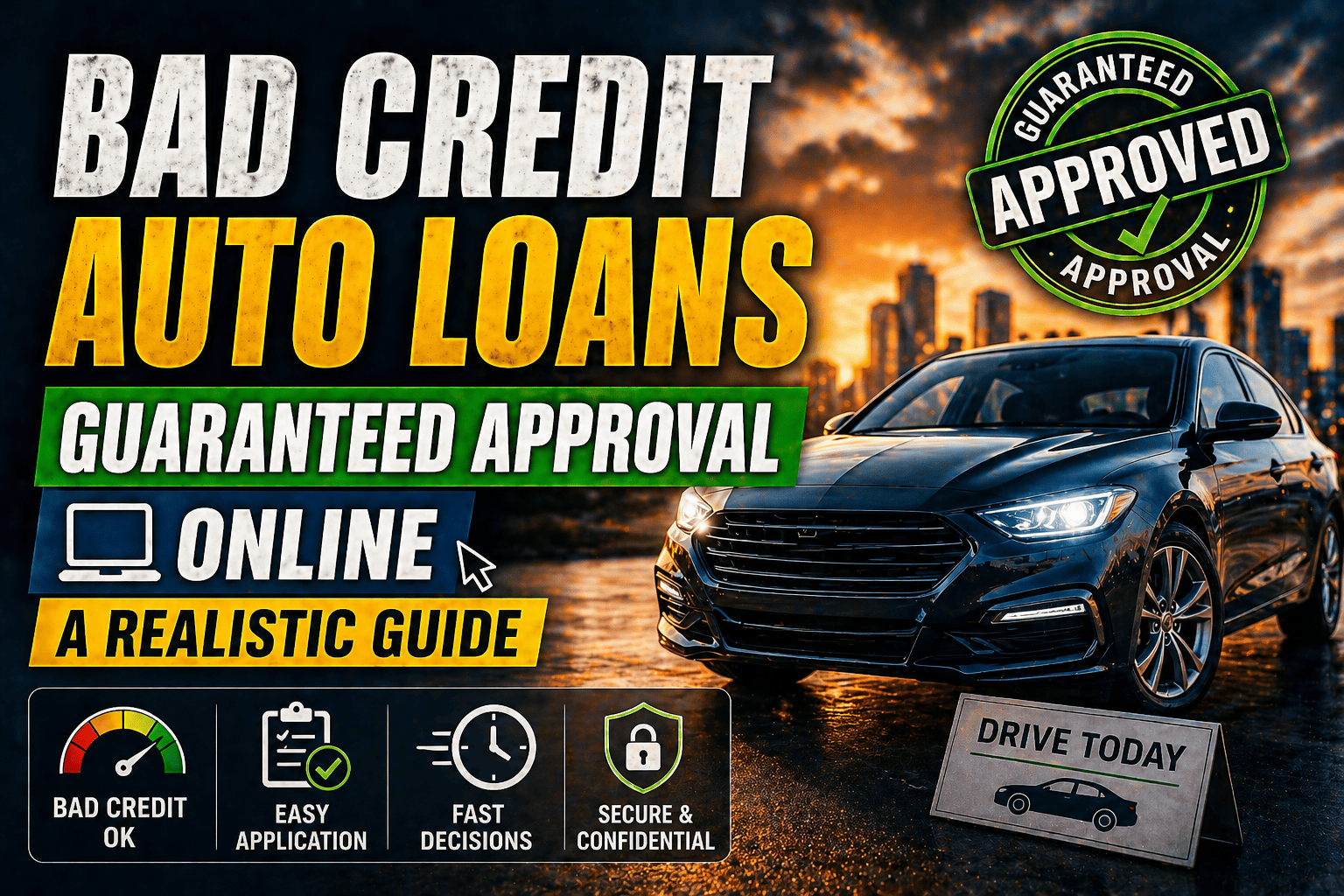
Let’s get one thing straight right away: “guaranteed approval” is a marketing slogan, not a real thing. It's a hook designed to catch the attention of people who are worried about their credit. The good news? Getting an auto loan online with bad credit is entirely possible. But it’s not about finding a magic bullet; it’s about understanding what lenders actually care about and getting your financial ducks in a row.

The Truth About "Guaranteed Approval" Auto Loans

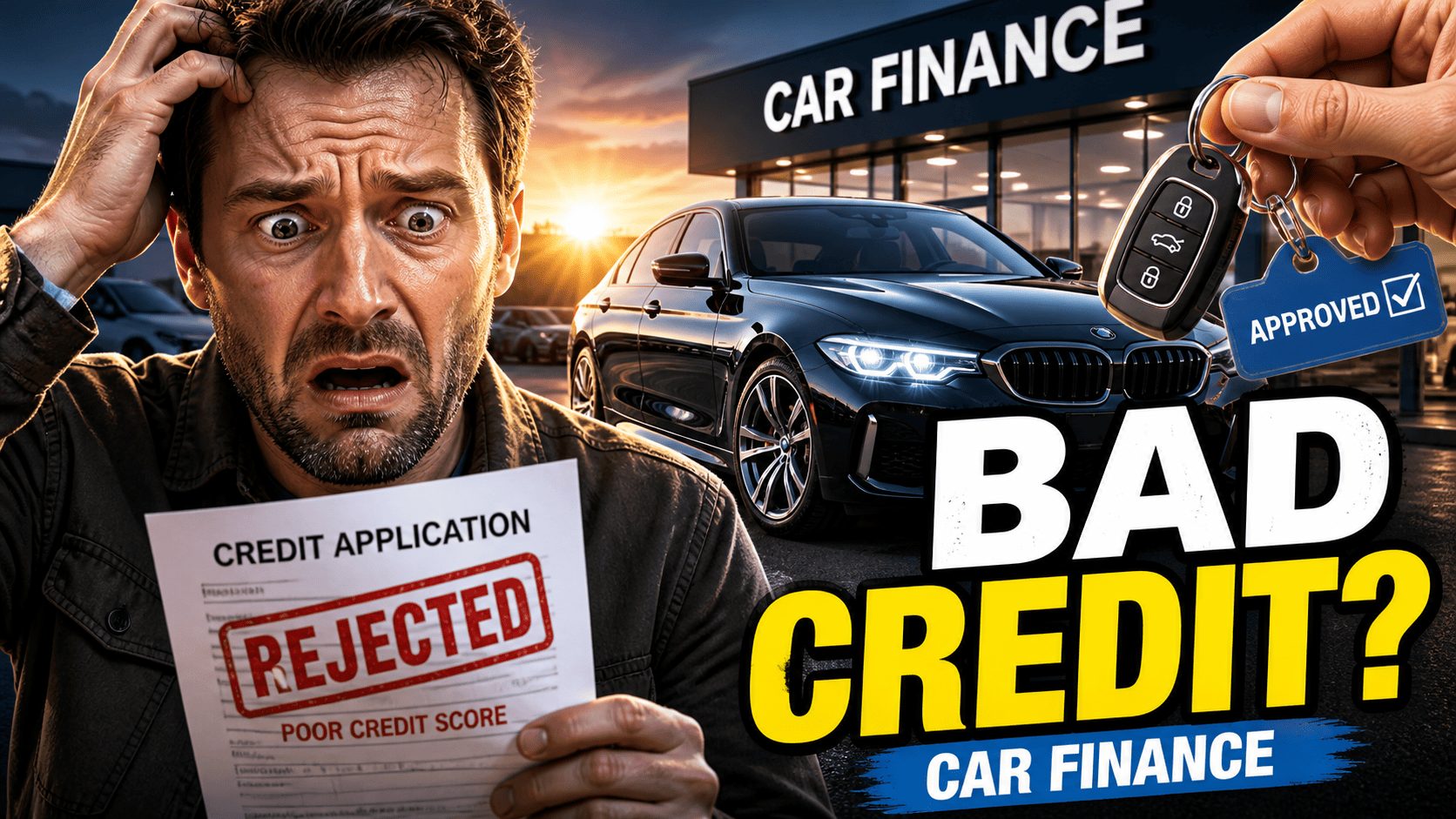
When you've been rejected for a car loan because of your credit score, seeing the words “guaranteed approval” can feel like a beacon of hope. But what does it really mean?

These aren't loans that get a rubber stamp for every applicant. Instead, they come from a specific group of lenders and dealerships that specialize in working with people who have less-than-perfect credit. The "guarantee" is really just their promise to look at more than your three-digit score.

These lenders dig deeper into your financial situation. They’ll put a lot more weight on things like your income, how long you’ve been at your job, and whether you can put some money down. This corner of the financing world is known as the subprime auto lending market, and it’s a pretty big deal.

What to Expect in the Subprime Market

You're definitely not alone if you're in this boat. About 14% of people who financed or leased a vehicle have credit scores below 601. That means millions of Americans are navigating the same challenges.

But this kind of financing comes with a price tag. Subprime borrowers (scores from 501-600) are looking at average interest rates of around 13.34%. If your score falls into the deep subprime category (300-500), that average can jump to 15.85%. So, while the loans are out there, you have to be prepared for them to be more expensive. You can see a full breakdown of how credit scores impact auto loan rates on NerdWallet.com.

The Bottom Line: Your goal isn't to find a mythical loan that bypasses all the rules. It's to find lenders who are willing to look at your whole financial story, not just your credit score.

Guaranteed Approval Myths vs. Lending Realities

To get the best deal possible, you have to know the difference between the marketing fluff and how lenders actually make decisions. Falling for the hype can lock you into a terrible deal, but understanding the reality gives you the power to find fair, manageable terms.

Here’s a look at some common myths and the truth behind them.

Common Myth Lender Reality
"My credit score is the only thing that matters." Lenders assess your entire profile, including your income stability and your debt-to-income (DTI) ratio. A steady job can go a long way.
"Guaranteed approval means I don't need a down payment." A down payment is one of the strongest signals you can send a lender. It lowers their risk and is often the key to getting approved with bad credit.
"Any approval is a good approval." Predatory lenders are counting on you to think this way. A good approval comes with transparent, manageable terms—not just a 'yes.'
"I have to accept the first offer I get." Absolutely not. You should always shop around. Using prequalification tools lets you compare offers from multiple lenders without hurting your credit score.

Thinking like a lender is the best way to prepare. They’re simply trying to manage their risk. The more you can do to show you're a reliable borrower—through a down payment, stable income, or a reasonable DTI—the better your chances of not only getting approved but also securing a decent interest rate.

Building a Stronger Case Before You Even Apply

Before you jump online and start filling out loan applications, let's take a step back. The goal isn't just to find a loan; it's to build a compelling case for one. Lenders who work with subprime credit aren't looking for perfection. What they are looking for is stability and signs of reduced risk. A few smart moves now can completely change the story your application tells.

Think of this as your prep phase. It’s not about some magical, overnight credit fix. It's about taking control of your financial narrative. You want to make the lender's decision to say "yes" an easy one by showing them you're a responsible borrower, even if your score has taken some hits.

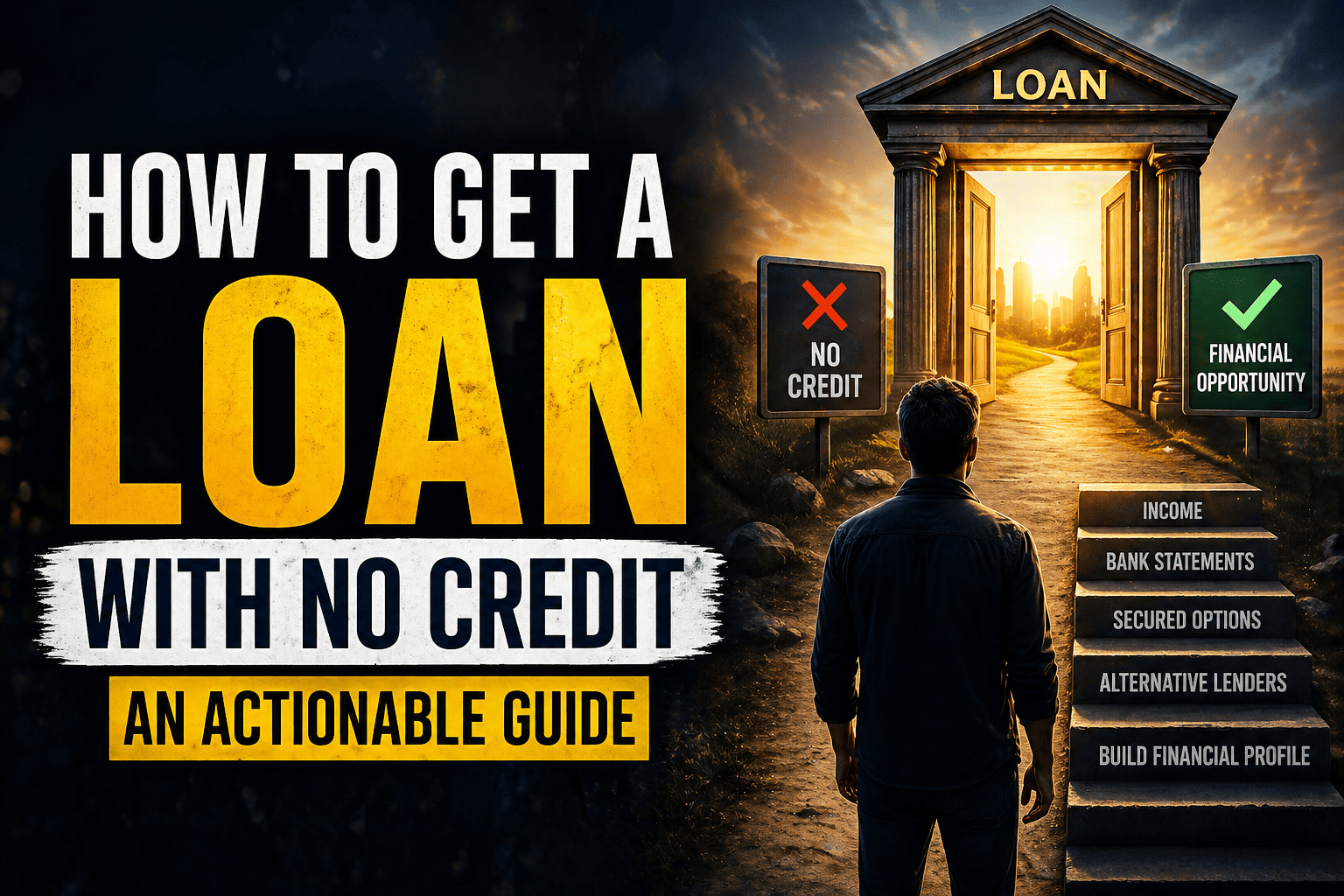
This simple visual breaks down the path to getting a loan. Notice that critical middle step? That's where the magic happens.

Jumping straight from searching to applying is a rookie mistake. You're skipping the single most important part where you can actually improve your chances.

See What the Lenders See—First

Your first move is to pull your credit reports from all three major bureaus: Equifax, Experian, and TransUnion. You can get them for free every year, so there's no excuse not to. Don't just glance at the score. You need to comb through every single line item.

Why? Because the lender will. They see it all: every late payment, every collection account, every open line of credit. You need to see this information exactly as they will to avoid any nasty surprises during the application process. This is also your golden opportunity to spot and dispute errors that could be unfairly tanking your score.

An old but still relevant Federal Trade Commission study found that one in five consumers had a verified error on at least one of their credit reports. Cleaning up these mistakes is often the fastest way to get a potential score bump.

Keep an eye out for the common culprits: accounts that aren't yours, incorrect late payment notations, or old negative marks that should have fallen off by now.

Tackle Your Debts With a Plan

With accurate reports in hand, it’s time to look at your existing debts. Lenders want to see that you're actively managing your finances, and having a clear strategy to pay down what you owe is a huge green flag. Two classic methods work wonders.

  • The Debt Snowball: You focus on paying off your smallest debts first, no matter the interest rate. This approach is fantastic for building momentum. Each time you wipe a debt off the books, you get a psychological win that keeps you motivated.

  • The Debt Avalanche: You attack the debt with the highest interest rate first. From a purely mathematical standpoint, this method saves you the most money over time and is the most efficient way to become debt-free.

Pick one and stick with it. Even a small reduction in your total debt can improve your debt-to-income (DTI) ratio, a number every auto lender scrutinizes.

Focus on Quick Wins That Matter Most

While rebuilding credit is a marathon, not a sprint, there are a few things you can do right before applying that have an outsized impact. These are the "low-hanging fruit" that can make or break an underwriter's decision.

Your credit utilization ratio is a big one. This is the amount of credit you're using on your credit cards compared to your total limits. Anything over 30% is a red flag to lenders, suggesting you might be stretched too thin. If your cards are maxed out, paying them down is one of the quickest ways to improve your profile.

Also, make sure every single one of your current accounts is in good standing. If you have any recent past-due payments, get them caught up immediately. Lenders are far more willing to work with someone who had trouble in the past than with someone who is actively falling behind right now.

To get a clear, actionable picture of where you stand, a platform like The Score Machine can analyze your overall credit readiness. It shows you what lenders see and pinpoints the exact steps that will give you the most bang for your buck. Taking these targeted actions turns you from a hopeful applicant into an empowered borrower, ready to negotiate the best deal possible.

How Smart Lenders Turn a "No" Into a "Not Yet"

It might seem like lenders are just looking for a reason to say no, especially when you're dealing with a bad credit auto loan guaranteed approval online. But in reality, the best lenders want to fund more loans, not fewer. The old-school problem was that a low credit score was a dead end. It meant a fast rejection, and everyone walked away frustrated.

That whole process is changing. Instead of a hard "no," modern funding companies are using credit intelligence tools to find a path to "yes." It's a massive shift in thinking—they're moving from being gatekeepers to being guides.

This new way of doing things is a win-win. Lenders get a pipeline of people who are genuinely ready for a loan, and you get a clear, step-by-step plan to get yourself approved.

From Automatic Denial to a Clear Game Plan

The old way of doing things was a huge waste of time and money for lenders. They’d process an application, sink resources into it, and then hit a wall—maybe a debt-to-income ratio that was too high or an old collection account they couldn't overlook. The result? A denied file and an unhappy customer.

Credit intelligence platforms completely flip that on its head. Now, an automated system can look at your credit profile before it ever gets to a human underwriter. It pinpoints the exact issues holding you back. Instead of just sending a denial letter, the lender can give you a precise, data-backed plan to fix them.

For instance, the system might see that:

  • Your credit card balances are too high. It can show that paying down one specific card by $500 would give your profile the boost it needs.

  • There’s an error on your report. It could flag a paid medical bill that’s still showing as an open collection—a common mistake that really hurts your score.

  • Your credit history is a bit thin. The tool might suggest opening a secured credit card to build up a more solid payment history.

With this information, the lender isn't just a judge anymore; they become a problem-solver. They’re giving you the exact playbook you need to come back and get that approval.

Why This Is a Game-Changer for Lenders

For a funding company, this strategy is incredibly smart. It solves some of the biggest headaches in their business and directly boosts how many loans they can fund. At its core, it stops them from pouring money into applications that were never going to make it past the finish line anyway. By guiding applicants to become fundable, lenders create their own pipeline of qualified borrowers, ultimately increasing their funding volume.

This isn't just about saving money on paperwork. By showing you how to get approved, lenders turn a rejection into a relationship. You're no longer just a denied applicant; you're a future customer they've invested in.

This is where a tool like Thescoremachine comes in. It provides a dashboard that lays out all this information visually.

As you can see, it turns confusing credit data into a simple blueprint. This allows the lender to have a real conversation with you about what to do next to get the loan.

Ultimately, this smarter approach gives the lender some serious advantages:

  1. A Better Pipeline of Applicants: They’re no longer digging through a mountain of unqualified files. Instead, they get a steady stream of people who have already fixed the major issues.

  2. More Loans Funded: When you turn denials into future approvals, you naturally end up closing more deals.

  3. Happier, More Loyal Customers: When a company helps you solve a problem, you trust them. You’re far more likely to come back for your next loan and tell your friends.

  4. Lower Costs: Lenders spend less time and money on dead-end applications, which makes their entire operation more efficient.

Navigating The Online Application Process Safely

Jumping into the world of online auto loans when you have bad credit can feel like walking through a minefield. On one hand, you desperately need a vehicle. On the other, the last thing you want is to ding your credit score even more or get tangled up in a predatory deal.

The key is to shop smart, not just fast.

Believe it or not, the online lending space has actually been a game-changer for many people. It’s opened doors that were once firmly shut, with some lenders now working with applicants who have credit scores as low as 470.

Instead of just looking at the score, many now focus on other signs of stability, like a minimum annual income (often around $21,600) and no recent bankruptcies. In fact, about 14% of all car loans go to borrowers with scores below 601, and online lenders have adapted with flexible terms that can stretch up to 96 months. This is a massive shift, and you can see more data on how online lenders have changed the bad credit auto loan market on LendingTree.com.

This accessibility is great news, but it also means you have to be your own biggest advocate. Let's break down how to handle the process like a pro.

Soft Pulls vs. Hard Inquiries: Know The Difference

This is probably the single most important thing to understand before you fill out a single form. Getting this wrong can sabotage your loan search before it even gets going.

soft pull (or soft inquiry) is basically a preliminary check. It's when you or a lender takes a peek at your credit to see where you stand for prequalification. The best part? It has zero impact on your credit score. This is your best friend when you’re shopping around and comparing your options.

hard inquiry is the real deal. It happens when you officially apply for a loan. This type of inquiry gets logged on your credit report and can cause your score to dip a few points temporarily. Now, the credit bureaus are smart enough to group multiple auto loan inquiries within a 14- to 45-day window as a single event, but you should only pull this trigger when you're truly serious about a specific offer.

My Two Cents: Before you give any personal info, explicitly ask the lender or dealership: "Does your prequalification process use a soft pull?" If they get cagey or can't give you a straight "yes," that's a red flag. Thank them for their time and move on.

Get Your Paperwork In Order

Want to know the secret to a fast, smooth approval? Be prepared. Lenders need to verify who you are and that you have the income to back up the loan. Walking in (or applying online) with all your documents ready shows them you’re serious and organized.

Before you start, pull together a digital or physical folder with these items:

  • Proof of Income: Your last two pay stubs are usually perfect. If you're self-employed, the last two months of bank statements showing consistent deposits will work.

  • Proof of Residence: A recent utility bill (gas, electric, water) or a cell phone bill with your name and address is all you need.

  • Valid Identification: Your driver's license is standard, but any current government-issued photo ID will do.

  • Proof of Insurance: You can’t drive off the lot without it, so have your agent's info or a policy declaration page handy.

Having this file ready to go makes the process so much less stressful. A great way to keep track of everything is to use a detailed loan preparation checklist to make sure nothing falls through the cracks.

How To Spot The Sharks In The Water

Sadly, where there are people in a tough spot, there are predatory lenders looking to take advantage. Your best defense is a good offense—knowing exactly what their tricks look like.

If you see any of these tactics, hit the brakes immediately.

Classic Predatory Red Flags:

  • Paying Fees Upfront: Legitimate lenders never, ever ask for an "application fee" or "guarantee fee." All legitimate costs are rolled into the loan itself and disclosed in the final paperwork.

  • High-Pressure Sales: Anyone telling you an offer is "only good for today" or pressuring you to sign right now is not on your side. A good deal will still be a good deal tomorrow.

  • Vague or Confusing Terms: If a lender can’t clearly explain the APR, the total cost of the loan, or the prepayment penalty, they are either incompetent or hiding something. Either way, you should run.

  • Blank Spaces on the Contract: This is a huge no-no. Never, ever sign a document with blank lines. Those can be filled in later with whatever terms the lender wants, and you’ll be on the hook for it.

Always trust your gut. A good lender acts like a partner; they'll be transparent, answer your questions patiently, and make you feel confident in your decision. Your goal isn't just to get an approval—it's to find a loan that actually helps you move forward.

How to Structure Your Loan and Explore Alternatives

Getting approved for a car loan with less-than-perfect credit is a major hurdle cleared, but it’s not the finish line. Honestly, this is where the real work starts—shaping that loan approval into a deal that actually works for you long-term. The first offer you see is almost never the best and final one.

Think of yourself as a negotiator, not just an applicant. By getting a handle on the three main parts of any loan—the down payment, the loan term, and the interest rate—you can pull the right levers to save yourself a ton of money. It's crucial to look past the monthly payment and see the big picture: the total cost of the car.

The Power of a Strong Down payment

Putting money down is the single best move you can make to get better loan terms. From a lender's perspective, a down payment shows you're serious and financially committed. It immediately lowers their risk because you have "skin in the game" from day one.

But this isn't just about making the lender happy. It has a direct, positive impact on your finances. Every single dollar you put down is a dollar you don’t have to borrow and pay interest on.

  • Lower Loan-to-Value (LTV) Ratio: Lenders get anxious when the loan amount is way higher than the car's sticker price. A down payment shrinks that gap, making your application look much safer and more appealing.

  • Reduced Monthly Payments: It's simple math. A smaller loan principal means a smaller monthly payment, which frees up cash in your budget.

  • Less Interest Paid Over Time: The less you borrow, the less interest you pay. This is where the real, substantial savings happen over the years.

I always tell people to aim for at least 10% of the vehicle’s price as a down payment. But even $500 or $1,000 can make a real difference in the terms a lender is willing to offer you.

The Loan Term Balancing Act

Be prepared for lenders to push for longer loan terms, like 72 or even 84 months. On the surface, it’s an easy sell—it drops your monthly payment and makes a more expensive car seem within reach. This is a classic trap.

A longer term means you'll pay far more in interest. You also dramatically increase the risk of becoming "upside down," where you owe more on the loan than the car is actually worth. That’s a terrible financial position to be in.

Expert Tip: Always insist on seeing the numbers for different term lengths—like 48, 60, and 72 months. The 72-month payment will look the most attractive, but when you see the total interest paid for each option, the true cost becomes painfully clear. Pick the shortest term you can genuinely afford without stretching your budget too thin.

Before you ever sign anything, play around with a good car loan calculator to see how different down payments and loan terms change the numbers. This simple exercise arms you with the knowledge you need to negotiate effectively.

When Online Lenders Aren’t the Right Fit

Sometimes, you do everything right and the online offers just don't pan out. The interest rates might be sky-high, or you just can't get an approval. Don't let it discourage you. It just means it's time to pivot and look at some other proven options.

These alternatives provide different paths to getting behind the wheel and can be a lifesaver when online lending hits a wall.

Consider a Co-Signer
Bringing in a co-signer who has a strong credit profile can be a total game-changer. They're essentially lending you their good credit score, which drastically reduces the lender's risk. This can unlock a much lower interest rate than you could ever get on your own. Just be aware that this is a massive favor—your co-signer is legally on the hook for the entire loan if you miss payments.

Dealership Special Finance Departments
Most big car dealerships have a special finance department specifically designed to help people with credit issues. These folks have built-up relationships with a network of subprime lenders and know exactly how to package an application for approval. It can be a great one-stop-shop approach.

Buy Here, Pay Here (BHPH) Dealerships
For many, a BHPH lot is the last resort, but they absolutely serve a purpose. At these dealerships, the dealer is the lender. They usually won't run a credit check and focus almost entirely on your income.

| Buy Here, Pay Here | Pros | Cons |
| :--- | :--- |
Approval | Getting approved is far easier, often based on your proof of income alone. | Interest rates are incredibly high, frequently 20% or more. |
Payments | It's a way to get a car when every other door has been closed. | Payments are often due weekly or bi-weekly, and you might have to pay in person. |
Credit Building | A few will report to credit bureaus, which can help your score. | Many do not, meaning all your on-time payments won't help you rebuild credit. |

If you have to go the BHPH route, ask one critical question: "Do you report my payments to the major credit bureaus?" If the answer is no, that loan won't do anything to help you qualify for better financing in the future.

Turn Your Auto Loan Into a Credit-Building Machine

Getting the keys to your new car isn't the finish line—it's the starting block for your financial comeback. Think of this bad credit auto loan as more than just a way to get around; it's one of the most powerful tools you have to rebuild your credit history.

Every single on-time payment you make sends a positive signal to the credit bureaus, showing them you’re a responsible borrower. This is your chance to prove your creditworthiness month after month.

The smartest move you can make right away is to set up automatic payments. Seriously, do it the same day you sign the papers. This one simple action all but guarantees you'll never have a late payment, which is the quickest way to undo all your hard work. Even a payment that's one day late can result in a negative mark on your report.

Keep the Momentum Going

Once your payments are on autopilot, you can get strategic. Want to speed things up? Try making small extra payments whenever you can. Even rounding up your payment to the nearest $50 helps chip away at the principal. This not only gets you out of debt faster but also reduces the total interest you'll pay.

Keep a close eye on your credit reports. It’s incredibly motivating to watch your score climb as those on-time payments start adding up. This auto loan is your opportunity to rewrite your financial narrative. It's not just about the car; it’s your vehicle for driving toward better interest rates, easier loan approvals, and true financial freedom down the road.

Answering Your Top Questions

When you're trying to get a car loan with less-than-perfect credit, a lot of questions pop up. It's totally normal. Let's tackle some of the most common ones I hear from people so you can feel more confident about your next steps.

Can I Really Get A Car Loan With No Money Down If I Have Bad Credit?

Honestly, it's extremely unlikely. While you might see "zero-down" ads, those deals are almost never for someone with a challenging credit history. Lenders see a down payment as you having some skin in the game, which lowers their risk.

Think of it this way: putting even $1,000 down or covering 10% of the car's price can make a world of difference. It doesn't just boost your approval chances—it also means you're financing less, which leads to a smaller monthly payment and less interest paid over time. It’s a win-win.

Will Shopping Around For Loans Online Tank My Credit Score?

This is a great question, and the answer comes down to how you shop. You want to stick to prequalification tools that only perform a "soft pull" on your credit. These are like a sneak peek for lenders that don't affect your score at all. You can get several of these without any negative impact.

"hard inquiry" only happens when you formally apply for the loan. The credit bureaus are smart about this—they usually bundle multiple auto loan inquiries made within a 14 to 45-day period as a single event. Still, the best strategy is to avoid hard inquiries until you've prequalified and found the lender you want to work with.

Pro Tip: Before you give any lender your Social Security Number, ask them point-blank: "Does your pre-approval process use a soft inquiry?" A trustworthy lender will give you a straight "yes." If they're cagey about it, that's your cue to walk away.

What’s The Easiest Type Of Car To Get Financed With Bad Credit?

Lenders are all about managing risk. For them, a reliable, affordable used car is a much safer bet than a brand-new vehicle or a luxury model, especially for a subprime borrower.

By setting your sights on a practical used car from a solid brand, you accomplish two crucial things. First, you dramatically increase your odds of getting a "yes" from the lender. Second, you keep your monthly payments from getting out of hand, which is the key to successfully using this loan as a tool to rebuild your credit.

What Else Do Lenders Care About Besides My Credit Score?

  • Your credit score is a big deal, but it’s not the whole story. Lenders are really trying to understand your overall financial stability.

  • They’ll look closely at a few other things:

    • Your Job History: A steady, consistent income is a huge green flag for lenders.

    • Debt-to-Income (DTI) Ratio: They want to see that your existing debt payments don't take up too much of your monthly income.

    • Your Down Payment: The more cash you can bring to the table, the less risk they take on.

  • Often, a stable job and a decent down payment can speak louder to a lender than a low credit score.

Frequently Asked Questions:

Q: Is there really such a thing as a guaranteed approval auto loan for bad credit?

No. “Guaranteed approval” auto loans do not truly exist. The phrase is a marketing term used by lenders who specialize in bad credit and subprime borrowers. These lenders do not approve everyone automatically—they evaluate income, job stability, debt-to-income ratio, and down payment, not just your credit score.

Q: Can I get a bad credit auto loan online with a very low credit score?

Yes. Many online lenders work with borrowers who have credit scores as low as 470–500. Approval depends more on verifiable income, stable employment, and affordability than the score alone. However, lower scores usually mean higher interest rates.

Q: What credit score do I need to qualify for a subprime auto loan?

  • Subprime auto loans typically serve borrowers with credit scores between 300 and 600.

    • 501–600: Subprime

    • 300–500: Deep subprime
      Even borrowers in deep subprime categories can qualify if income and down payment are strong.

Q: Will applying for multiple auto loans hurt my credit?

Not if you do it correctly. Prequalification uses soft credit checks, which do not affect your score. Hard inquiries only occur when you formally apply, and multiple auto loan inquiries made within a 14–45 day window are usually counted as one by credit bureaus.

Q: Is a down payment required for bad credit auto loans?

In most cases, yes. A down payment is one of the most important approval factors for borrowers with bad credit. Even $500–$1,000 can significantly improve approval odds, lower interest rates, and reduce monthly payments.

Q: What interest rates should I expect with bad credit?

  • Bad credit auto loan interest rates are higher due to risk:

    • Subprime (501–600): ~13% average APR

    • Deep subprime (300–500): ~15–20%+ APR
      Rates vary based on income, loan term, vehicle type, and down payment.

Q: Are online bad credit auto lenders safe?

  • Many are legitimate—but some are predatory. Safe lenders:

    • Do not charge upfront fees

    • Clearly disclose APR, total loan cost, and terms

    • Use soft pulls for prequalification

    • Allow time to review contracts
      Avoid lenders that pressure you to sign immediately or refuse to explain terms.

Q: What documents do I need to apply for a bad credit auto loan online?

  • Most lenders require:

    • Proof of income (pay stubs or bank statements)

    • Proof of residence (utility bill)

    • Valid photo ID

    • Insurance information
      Having documents ready speeds up approval significantly.

Q: Is it better to buy new or used with bad credit?

reliable used vehicle is usually easier to finance with bad credit. Used cars lower lender risk, reduce loan amounts, and keep monthly payments manageable—making approval more likely and credit rebuilding easier.

Q: Do Buy Here Pay Here (BHPH) dealerships help rebuild credit?

Sometimes—but not always. Only BHPH dealers that report payments to credit bureaus help rebuild credit. Always ask before signing. Many BHPH loans have very high interest rates and strict payment schedules.

Q: Can a co-signer help me get approved with bad credit?

Yes. A co-signer with strong credit can dramatically improve approval chances and lower interest rates. However, they are legally responsible for the loan if you miss payments, so this should be approached carefully.

Q: How can I improve my chances before applying?

  • Before applying:

    • Pay down credit card balances below 30% utilization

    • Catch up on any past-due accounts

    • Dispute credit report errors

    • Reduce overall debt where possible
      Small improvements can turn a denial into an approval

Q: Can a bad credit auto loan actually help my credit score?

Yes—if payments are made on time. Auto loans add positive payment history and credit mix. Setting up automatic payments is one of the most effective ways to rebuild credit using an auto loan.

Q: What should I avoid when applying for bad credit auto loans online?

  • Avoid:

    • Upfront “approval” or “processing” fees

    • Signing contracts with blank fields

    • Offers that hide APR or total loan cost

    • Weekly or bi-weekly payment traps without full disclosure

  • If something feels rushed or unclear, walk away.

Q: What’s the smartest strategy for bad credit auto financing?

  • The smartest approach is:

    1. Prequalify with soft pulls

    2. Strengthen your credit profile first

    3. Compare multiple offers

    4. Use a down payment strategically

    5. Choose a manageable loan term

    6. Use the loan to rebuild credit—not just get a car


Ready to stop guessing and start planning? The Score Machine AI platform analyzes your credit file just like a lender would. In seconds, you get a clear, actionable blueprint to improve your fundability and get ready for your next auto loan.
Create your free account and get your personalized plan today at thescoremachine.com.

About the author

Ali Badi
Ali Badi

Contributing Writer

Ali Badi is a financial writer at Score Machine, covering credit intelligence, business funding, and loan-readiness guidance.

Credit Analysis Business Funding Loan Preparation

Published in

News Finance Credit