The best car insurance companies in 2026, according to combined rankings from U.S. News, Bankrate, NerdWallet, and Insurance.com, are Travelers (best overall value), State Farm (largest market share and agent network), GEICO (cheapest widely available rates), USAA (best for military families), and Erie Insurance (best claims satisfaction). The average cost of full coverage auto insurance in the United States is $2,356–$2,697 per year depending on the source, or roughly $196–$225 per month. Minimum liability-only coverage averages $682–$863 annually.
This guide covers everything you need to choose the right auto insurance company for your specific situation — whether you're a young driver paying $6,054/year, a family bundling home and auto, or someone with a less-than-perfect driving record searching for cheap car insurance near me.
Who Are the Top 10 Auto Insurance Companies in America?
The 10 largest auto insurance companies in the United States by direct written premium and market share are:
| Rank | Company | Best For | Avg. Monthly Rate (Full Coverage) | AM Best Rating |
|---|---|---|---|---|
| 1 | State Farm | Largest agent network, bundling | ~$230 | A++ |
| 2 | Progressive | Rideshare drivers, high-risk drivers | ~$226 | A+ |
| 3 | GEICO | Cheapest widely available rates | ~$178 | A++ |
| 4 | Allstate | Innovative features (Milewise, Drivewise) | ~$267 | A+ |
| 5 | USAA | Military families (cheapest overall) | ~$131 | A++ |
| 6 | Farmers | Coverage variety, 19M+ policies | ~$257 | A |
| 7 | Liberty Mutual | Customization options | ~$220 | A |
| 8 | Travelers | Best overall value, lowest national rates | ~$178 | A++ |
| 9 | AAA (Auto Club) | Membership perks, roadside assistance | ~$185 | A+ |
| 10 | American Family | Cheapest for poor credit drivers | ~$159 | A |
Sources: ValuePenguin/NAIC market share data, Insure.com 2026 rate analysis, AM Best financial strength ratings.
Together, these 10 companies collect approximately 76% of all auto insurance premiums written in the United States. But bigger doesn't always mean cheaper — regional carriers like Erie auto insurance, Auto-Owners Insurance, and Amica frequently beat national companies on both price and customer satisfaction.
Who Are the Top 5 Car Insurance Companies?
If you need a quick answer, here are the top 5 based on combined editorial rankings across major U.S. review platforms in 2026:
1. Travelers — Best Overall Value
Travelers earned the #1 spot on both Insurance.com and Insure.com for 2026 with an overall score of 4.55/5. It pairs below-average premiums (around $178/month for full coverage) with high customer satisfaction and strong claims handling. Travelers also offers solid policy add-ons like gap coverage, new car replacement, and rideshare coverage.
Available in: 42 states
2. GEICO — Best Cheap Rates Nationwide
GEICO consistently delivers some of the lowest rates in the country, especially in New York and New Jersey. It's the only major insurer with the combination of rock-bottom pricing and availability in all 50 states plus D.C. Average full coverage runs about $178/month.
Available in: All 50 states + D.C.
3. State Farm — Best Agent Network in America
As the largest auto insurer by market share, State Farm offers the most extensive network of local insurance agents in the country. It was the only national insurer to rank above average in every region in J.D. Power's 2025 Auto Insurance Study. State Farm is currently unavailable in Massachusetts and Rhode Island but has announced plans to re-enter Massachusetts in early 2027.
Available in: 48 states + D.C.
4. Erie Insurance — Best Claims Experience
Erie auto insurance received an A- from the CRASH Network Insurer Report Card — fourth out of 91 companies — and ranked first in J.D. Power's Claims Satisfaction report. Its Rate Lock feature keeps premiums steady even after a claim, and it includes pet injury protection and travel expense coverage at no additional cost.
Available in: 12 states + D.C. (Mid-Atlantic and Midwest)
5. USAA — Best for Military Families
USAA topped Kiplinger's 2026 Readers' Choice Awards for the second consecutive year. It offers the lowest average rates in the industry (~$131/month for full coverage) with exceptional customer service. The catch: eligibility is limited to active military, veterans, and their families.
Available in: All 50 states + D.C. (military eligibility required)
What Are the Main Types of Car Insurance Coverage in the U.S.?
Understanding coverage types is the foundation of choosing the right policy. Here are the core auto insurance coverages every American driver should know:
The 4 Essential Coverage Types
| Coverage Type | What It Pays For | Required? | Typical Limits |
|---|---|---|---|
| Liability (Bodily Injury + Property Damage) | Injuries and property damage you cause to others | Yes — required in 49 states (all except NH) | 25/50/25 minimum in most states |
| Collision | Damage to your car from a crash, regardless of fault | No — but required by lenders/lessors | Subject to deductible ($250–$1,000) |
| Comprehensive | Non-crash damage: theft, vandalism, weather, animal strikes, falling objects | No — but required by lenders/lessors | Subject to deductible ($250–$1,000) |
| Uninsured/Underinsured Motorist (UM/UIM) | Covers you when the at-fault driver has no or insufficient insurance | Required in ~20 states | Matches your liability limits |
Liability + collision + comprehensive is what most people mean when they say full coverage auto insurance. If you're financing or leasing a vehicle, your lender will almost certainly require collision and comprehensive on top of your state's minimum liability requirements.
Additional Coverage Types Worth Considering
- Medical Payments (MedPay) — Pays medical bills for you and your passengers after an accident, regardless of who's at fault. Available in most states.
- Personal Injury Protection (PIP) — Similar to MedPay but broader. Covers medical bills, lost wages, and even childcare costs. Required in no-fault states like Florida, Michigan, and New York.
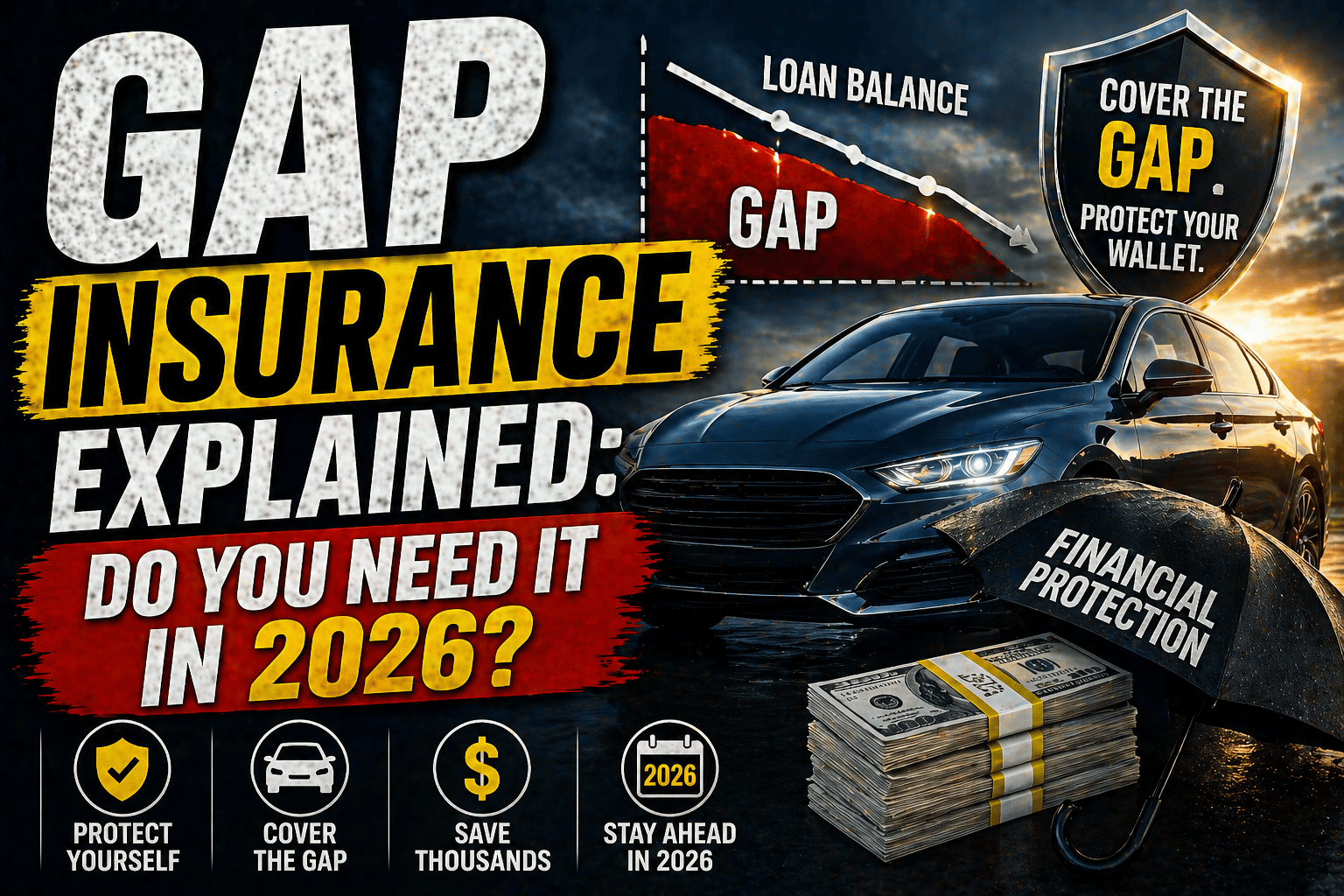
- Gap Insurance — Covers the difference between what you owe on your car loan and what the car is actually worth if it's totaled. Critical for new cars that depreciate fast.
- Rental Reimbursement — Pays for a rental car while yours is being repaired after a covered claim. Usually $30–$50/day.
- Roadside Assistance — Covers towing, flat tire changes, lockout service, and jump-starts. Costs just a few dollars per month.
- Rideshare Coverage — Extends your personal policy to cover gaps in Uber/Lyft insurance when the app is on but you haven't matched with a rider. Offered by Progressive, Travelers, and others.
How Much Does Auto Insurance Cost in the U.S. in 2026?
National Average Rates
The cost of auto automobile insurance varies by source, but here's what the major U.S. research organizations report for 2026:
| Source | Full Coverage (Annual) | Full Coverage (Monthly) | Minimum Coverage (Annual) |
|---|---|---|---|
| Autoinsurance.com | $2,356 | $196 | $722 |
| Bankrate | $2,697 | $225 | $820 |
| Insure.com | $2,513 | $209 | — |
| ValuePenguin | $2,496 | $208 | — |
| Experian | $2,930 | $244 | $1,573 |
| Insurify | $2,158 | $180 | — |
The wide range reflects different data methodologies — some use quoted rates, others use actual premiums paid, and sample driver profiles vary. A reasonable midpoint estimate is $2,400–$2,550/year for full coverage for a U.S. driver with a clean record and good credit.
What Drives Your Rate Up (or Down)
- Credit score: Drivers with poor credit pay an average of $4,720/year — nearly double the $2,524 that drivers with good credit pay (per U.S. News data). California, Hawaii, Massachusetts, and Michigan restrict or ban credit-based pricing.
- Age: Teen drivers pay the most at roughly $6,054/year. Rates drop significantly at age 25 and again around age 60.
- Location: Florida averages $306/month; Vermont averages just $123/month. States with high uninsured driver rates, severe weather, and heavy traffic pay more.
- Driving record: At-fault accidents, speeding tickets, and DUIs raise premiums 20–94% above a clean record.
- Vehicle type: The Tesla Model Y is the most expensive new car to insure in 2026 at $354/month. EV insurance is getting cheaper, though — the top 9 EVs average $309/month, down from previous years.
Most and Least Expensive States for Car Insurance
| 5 Most Expensive States | Avg. Monthly (Full Coverage) | 5 Cheapest States | Avg. Monthly (Full Coverage) |
|---|---|---|---|
| Florida | $306 | Vermont | $123 |
| Nevada | $335 | Maine | $138 |
| Louisiana | $327 | New Hampshire | $118 |
| Connecticut | $300+ | Idaho | ~$130 |
| Delaware | $300+ | Ohio | ~$140 |
Sources: ValuePenguin, Autoinsurance.com, and Experian March 2026 data.
Cheapest Auto Insurance Companies for 2026
If price is your top priority, here are the companies with the lowest average full coverage rates available to U.S. drivers:
| Company | Avg. Monthly (Full Coverage) | Availability | Best For |
|---|---|---|---|
| USAA | $131 | Military families only | Cheapest overall (if eligible) |
| American Family | $159 | 19 states | Drivers with poor credit |
| Erie Insurance | $159 | 12 states + D.C. | Low cost + best claims service |
| Auto-Owners | $171 | 26 states | Budget coverage through agents |
| Travelers | $178 | 42 states | Best overall value nationally |
| GEICO | $178 | All 50 states + D.C. | Cheapest option available everywhere |
Source: Insure.com 2026 rate analysis.
For cheap car insurance in Texas specifically, USAA, GEICO, and Progressive tend to offer the most competitive rates, though Texas is one of the more expensive states due to high accident frequency, hail damage, and severe weather exposure.
How to Get Cheap Car Insurance: 8 Strategies That Actually Work
If you're searching for how to get cheap car insurance, these strategies consistently save American drivers real money:
- Compare quotes from at least 3–5 companies. The cheapest insurer for one driver may not be cheapest for another. Every company uses a different formula for setting rates. Use comparison tools or contact an insurance broker near me to see multiple quotes at once.
- Raise your deductible. Increasing from $500 to $1,000 typically cuts premiums by 15–25%. Just make sure you can afford the higher out-of-pocket if you file a claim.
- Bundle home and auto. Companies like Amica, State Farm, and Allstate offer meaningful discounts for best auto and home insurance companies bundles — often 10–25% off.
- Ask about every available discount. Good student, defensive driving course, low mileage, multi-car, anti-theft device, paperless billing, and pay-in-full discounts are commonly available. Travelers and Farmers offer more discounts than most competitors.
- Check regional carriers. Smaller companies like Auto-Owners Insurance, Erie, and American Family frequently beat national carriers on price. Search for car insurance quotes near me and include at least one regional option.
- Shop every 6 months. Rates fluctuate regularly. The cheapest company for you today may change in six months as carriers adjust their pricing algorithms.
- Maintain good credit. In most states, improving your credit score from poor to good can cut your premium nearly in half — from ~$4,720/year to ~$2,524/year.
- Consider usage-based insurance. Programs like Allstate's Milewise and Progressive's Snapshot track your actual driving habits and reward safe, low-mileage drivers with lower premiums. Ideal for remote workers and retirees.
How to Choose the Right Auto Insurance Company
Captive Agents vs. Independent Agents vs. Online
When shopping for an auto insurance agency, you'll encounter three main buying channels in the U.S.:
- Captive agents (like State Farm or Allstate customer service agents) represent one company exclusively. They know their products inside-out but can only quote you from one carrier.
- Independent insurance agents represent multiple carriers and can compare quotes from several companies on your behalf. Searching for an insurance agency near me or independent insurance agents in your area is a smart way to see a wider range of options.
- Online direct (like GEICO, Progressive near me, or Insure on the Spot) lets you quote and buy entirely online or over the phone, often with lower overhead costs passed along as savings.
Real-world example: A driver in Ohio got quotes from State Farm ($210/month), GEICO ($178/month), and then contacted an independent agent who found Auto-Owners at $155/month — a company that doesn't even show up on most comparison websites. That's $660/year in savings just from checking one more channel.
What to Compare Beyond Price
Price matters, but the cheapest policy isn't always the best value. Also evaluate:
- Claims handling reputation — Check J.D. Power claims satisfaction scores and NAIC complaint ratios. Erie and USAA consistently lead here.
- Financial strength — An AM Best rating of A or higher means the company can reliably pay claims even after major disasters. All 10 companies in our top list carry A ratings or better.
- Discount availability — Some companies offer 10–15 discounts while others offer only 3–4. Travelers and State Farm lead in discount variety.
- Digital tools — Mobile apps for digital ID cards, claims filing, roadside assistance requests, and accident photo submission. GEICO and Progressive have the strongest apps.
- Coverage add-ons — Gap insurance, new car replacement, rideshare coverage, rental reimbursement, pet injury coverage. Erie and Travelers lead in available add-ons.
Auto Insurance Industry Trends for 2026
The insurance services landscape is shifting in several important ways for American drivers this year:
Rates are stabilizing after years of painful increases. After auto insurance premiums surged 46% from 2022–2024 (the worst underwriting performance in nearly 50 years), average rates dropped 6% in 2025. Insurify projects only a 1% increase in 2026. The auto insurance industry has returned to profitability, which means U.S. consumers should see more competitive pricing going forward. As Mark Friedlander of the Insurance Information Institute noted: "Now that we're seeing profitability return, consumers are going to benefit from lower rates on average."
Several carriers have filed for rate decreases. With improved profitability, multiple insurers have submitted rate reduction filings with state regulators effective in 2026. Drivers in 39 states experienced price decreases in 2025.
Electric vehicles are getting cheaper to insure. EV insurance costs are declining in 2026, bringing them closer to gas-powered vehicle rates. The top 9 EVs now cost an average of $309/month for full coverage — still higher than the national average but trending downward.
Usage-based insurance is going mainstream. Telematics programs that track actual driving behavior — mileage, braking habits, time of day — are no longer experimental. Allstate's Milewise, Progressive's Snapshot, and State Farm's Drive Safe & Save are all proven options for safe, low-mileage drivers.
Total loss claims are rising. Even as premiums stabilize, Bankrate warns that high vehicle repair costs and record-high new/used car prices mean total loss claims are increasing. Your claim check might not fully cover replacing your vehicle, making gap insurance more important than ever.
State Auto Insurance and Regional Carriers Worth Knowing
Not every great insurer is a household name. State auto and regional companies often outperform national brands on both price and customer service:
- Auto-Owners Insurance — Earned the best overall score of all companies in Insurance.com's 2026 rankings (tied with Travelers at 4.55/5). Sells exclusively through independent insurance agents, which means no online quoting — but its below-average rates and very low NAIC complaint ratio make it worth the phone call. Available in 26 states.
- Erie Insurance — Tied for the lowest average rates ($159/month) with the best claims satisfaction in the industry (ranked #1 by J.D. Power). Its Rate Lock feature keeps your premium steady even after you file a claim — a rare benefit. Available in 12 states + D.C.
- Amica — NerdWallet's #1 pick for 2026. Known for dividend-paying policies that refund a percentage of your premium back to you. Also top-rated by Bankrate. Best savings come from bundling with home insurance agency coverage. Available in 44 states.
- American Family — The cheapest major company for drivers with poor credit. Originally established to insure farmers' crops, now available in 19 states with strong discounts for students and families.
If you're searching for car insurance quotes near me or an insurance company near me, always include at least one regional carrier in your comparison — they're the hidden gems of the American auto insurance market.
Acceptance Insurance and First Acceptance: Options for High-Risk U.S. Drivers
If you have a poor driving record, bad credit, DUI history, or gaps in coverage, standard U.S. insurers may quote you very high rates or decline coverage entirely. That's where non-standard carriers like Acceptance Insurance and First Acceptance Insurance fill the gap.
These companies specialize in covering high-risk American drivers. They typically offer:
- Minimum liability coverage to meet your state's requirements
- SR-22 filing for drivers who need proof of financial responsibility after a DUI, at-fault accident, or lapsed coverage
- Flexible payment plans — monthly, bi-weekly, or even weekly in some cases
- Walk-in office locations where you can get insure on the spot coverage same-day
The trade-off is price. Non-standard carriers charge significantly higher premiums than standard insurers because they're covering riskier drivers. GEICO also has competitive rates for high-risk drivers (ranked best in category by Bankrate) and may be worth checking before going non-standard.
Pro tip: If your driving record improves — no tickets or accidents for 3–5 years — shop standard carriers again. You could save hundreds or even thousands per year by switching back once your risk profile improves.
Frequently Asked Questions About Auto Insurance Companies
What is the cheapest car insurance company in the U.S. in 2026?
USAA offers the lowest average rates at about $131/month for full coverage, but it's only available to military families. For the general public, GEICO and Travelers are consistently the cheapest at around $178/month. Regional carriers like Erie ($159/month) and American Family ($159/month) also beat national averages in the states where they operate.
Is full coverage car insurance worth it?
Yes, for most American drivers. If your car is worth more than $5,000, full coverage auto insurance — which adds collision and comprehensive to your liability policy — protects your own vehicle after an accident, theft, or weather damage. If your car is older and worth less than $5,000, minimum liability coverage might be the smarter financial choice.
How do I find cheap car insurance near me?
Start by comparing quotes online from 3–5 carriers. Then contact a local car insurance broker or independent insurance agents who can access multiple companies at once. Check regional carriers that may not appear on national comparison sites — companies like Auto-Owners, Erie, and Amica frequently have the lowest rates but don't advertise heavily.
What's the difference between an insurance agent and a broker?
An insurance agent represents one or more insurance companies (captive vs. independent). An insurance broker near me works on your behalf as the customer, shopping across multiple carriers to find the best policy for your needs. Brokers don't represent any single insurer, so their recommendations tend to be less biased.
How much car insurance do I actually need?
At minimum, you need your state's required liability limits. But most financial experts recommend at least 100/300/100 liability coverage ($100K per person / $300K per accident for bodily injury, $100K for property damage), plus collision and comprehensive if your vehicle has significant value. If you have substantial assets to protect, consider an umbrella policy.
Does credit score really affect car insurance rates?
Yes, significantly in most U.S. states. Drivers with poor credit pay an average of $4,720/year compared to $2,524 for good credit — an 87% difference. Four states — California, Hawaii, Massachusetts, and Michigan — restrict or ban insurers from using credit scores to set auto insurance rates.
Recommended External Authority Sources
- U.S. News & World Report — Best Car Insurance Companies: https://www.usnews.com/insurance/auto/best-car-insurance-companies — Comprehensive editorial rankings with 3,037 data points across cost, customer satisfaction, and policy features.
- Bankrate — Best Car Insurance Companies for May 2026: https://www.bankrate.com/insurance/car/best-car-insurance-companies/ — Proprietary Bankrate Scores combining financial strength, customer experience, and quoted rates.
- Insurance Information Institute (Triple-I): https://www.iii.org/ — Nonprofit industry body providing objective data on insurance trends, underwriting losses, and rate projections.
- National Association of Insurance Commissioners (NAIC): https://www.naic.org/ — State insurance regulator data including complaint ratios and market share statistics for all U.S. insurers.