
Last updated July 1, 2026
Capital One Business Loans offer flexible financing for entrepreneurs. Options include term loans, business lines of credit, SBA loans, equipment financing, and business credit cards. This guide covers loan types, qualification requirements, application steps, and interest rates — everything you need to choose the right funding solution.
Part of our complete business credit and funding guide — start there for the full picture on financing your business.
Added TOC — helps readers navigate a 3,200+ word guide and gives AI systems clearer section-level entities to cite.
In this guide:
- Capital One Small Business Loans
- Business Line of Credit vs Loan
- Capital One Commercial Loans
- Capital One Loan Requirements
- Capital One SBA Loans
- Capital One Business Credit Card
- Capital One Business Loan Rates
- Frequently Asked Questions
Quick stats:
| Stat | Figure | Source |
|---|---|---|
| Applicants who got full financing sought (2025 SBCS) | 42% | Federal Reserve |
| Resilient business owners who say a business credit card is essential to cash flow | 90% | Capital One Insights Center |
| Capital One business loan amount range | $10,000–$5,000,000 | Independent lender reviews |
Capital One Business Loans: A Complete Guide for Entrepreneurs
Finding the right business loan can feel overwhelming. Capital One offers refreshingly clear options for many entrepreneurs. They range from term loans for big-ticket purchases to flexible lines of credit for day-to-day needs. This guide breaks down everything you need to know about securing funding with Capital One.
Capital One Small Business Loans
Figuring out which financial product fits your business is the first and most important step. Capital One has several distinct tools, each built for a different job—whether that's covering payroll during a slow month or funding a major expansion. Understanding what each one does before you apply is key.
Getting a business loan isn't always a walk in the park. According to the Federal Reserve's most recent Small Business Credit Survey, only 42% of applicants received the full amount of financing they sought — 36% received some or most, and 22% received none. If you're looking at Capital One, this number should tell you one thing loud and clear: preparation is everything.
Comparing Capital One Small Business Loans
To get your bearings, it helps to see how the main loan types stack up. Think of a term loan as being like a mortgage—you get a lump sum for a specific, big purchase. A line of credit, on the other hand, is more like a credit card you keep in your back pocket for when you need it.
A trusted financial partner can play a vital role in helping small businesses build a smart, right-sized digital toolkit that supports long-term success. This involves choosing financing that aligns directly with your immediate and future objectives.
Each of these products serves a very different strategic purpose. Picking the right one can make or break your cash flow and completely change your growth plans. To simplify your decision, we've put together a quick comparison table. Think of this as your starting point for figuring out which Capital One financing option makes the most sense for your business right now.
Capital One Business Financing Options at a Glance
This table breaks down the primary business financing products from Capital One, helping you quickly spot the best fit for what you're trying to accomplish.
Capital One doesn't publish fixed rates publicly — actual rates depend on your business profile and are disclosed during underwriting. Loan amounts, however, are publicly reported: Capital One business financing generally ranges from $10,000 to $5 million, depending on the product. Figures below reflect that range as of July 2026.
| Financing Type | Best For | Typical Amount | Key Feature |
|---|---|---|---|
| Term Loan | Large, one-time purchases like equipment or real estate | $10,000–$5,000,000, varies by asset and profile | Fixed repayment schedule and interest rate |
| Business Line of Credit | Managing cash flow, inventory, and unexpected expenses | Revolving limit up to $5,000,000 | Flexible access to capital; draw funds as needed |
| SBA Loans | Businesses needing favorable terms or that may not qualify for conventional loans | Up to $5,000,000, depending on the SBA program | Government-guaranteed with longer repayment terms |
| Business Credit Card | Daily operational spending and building business credit | Based on creditworthiness | Rewards programs and immediate purchasing power |
Seeing them side-by-side makes it easier to understand their core purpose. Run the numbers on your own scenario with our funding calculator before you move forward with an application.
Business Line of Credit vs Loan
When you're comparing Capital One business loan options, you'll most often be choosing between a traditional term loan and a more flexible business line of credit. A term loan works like a fixed-purpose tool — built for one big job. A line of credit is more like a toolkit you keep on hand for whatever comes up.
Capital One Business Line of Credit
A Capital One business line of credit is all about flexibility. Instead of getting one big chunk of cash, you're approved for a revolving credit limit—a pool of funds you can tap into as needed. You can draw money for payroll during a slow month, stock up on inventory before a busy season, or handle an unexpected repair bill.
The best part? You only pay interest on the funds you actually use, not the entire credit limit.
Imagine you own a restaurant. You could use a line of credit to smooth out the unpredictable costs of fresh ingredients or to launch a last-minute marketing campaign. As your sales come in, you pay back what you borrowed, and the credit becomes available to use again. This on-demand access, often called a working capital loan, is designed to be a financial safety net for the everyday realities of running a business.
Capital One Working Capital Loan
A Capital One working capital loan, often structured as a line of credit, is designed to be a financial safety net for the everyday realities of running a business. This flexible access to cash helps you manage the normal ups and downs of your cash flow cycle.
According to Capital One's Blueprint for Business Resiliency report, 90% of resilient small business owners with a business credit card say it's essential to managing cash flow. Another 92% call it an important tool for financial flexibility.
This decision tree helps visualize how your primary business need should point you toward the right financing.
There's no universally "better" option — the right Capital One business loan depends on what your business needs right now.
- Choose a Term Loan If: You're making a single, significant purchase (like real estate or heavy machinery) and want the stability of a fixed repayment schedule.
- Choose a Line of Credit If: You need a financial cushion for ongoing expenses, want to actively manage your cash flow, or need to be prepared for surprise costs.
Capital One Commercial Loans
When your business graduates from managing day-to-day cash flow to planning a massive leap forward, the Capital One business loan you need changes, too. This is where the heavy hitters come in: Capital One commercial loans and Capital One equipment financing. These aren't for making payroll next week; they're for making game-changing moves that define your company's future.
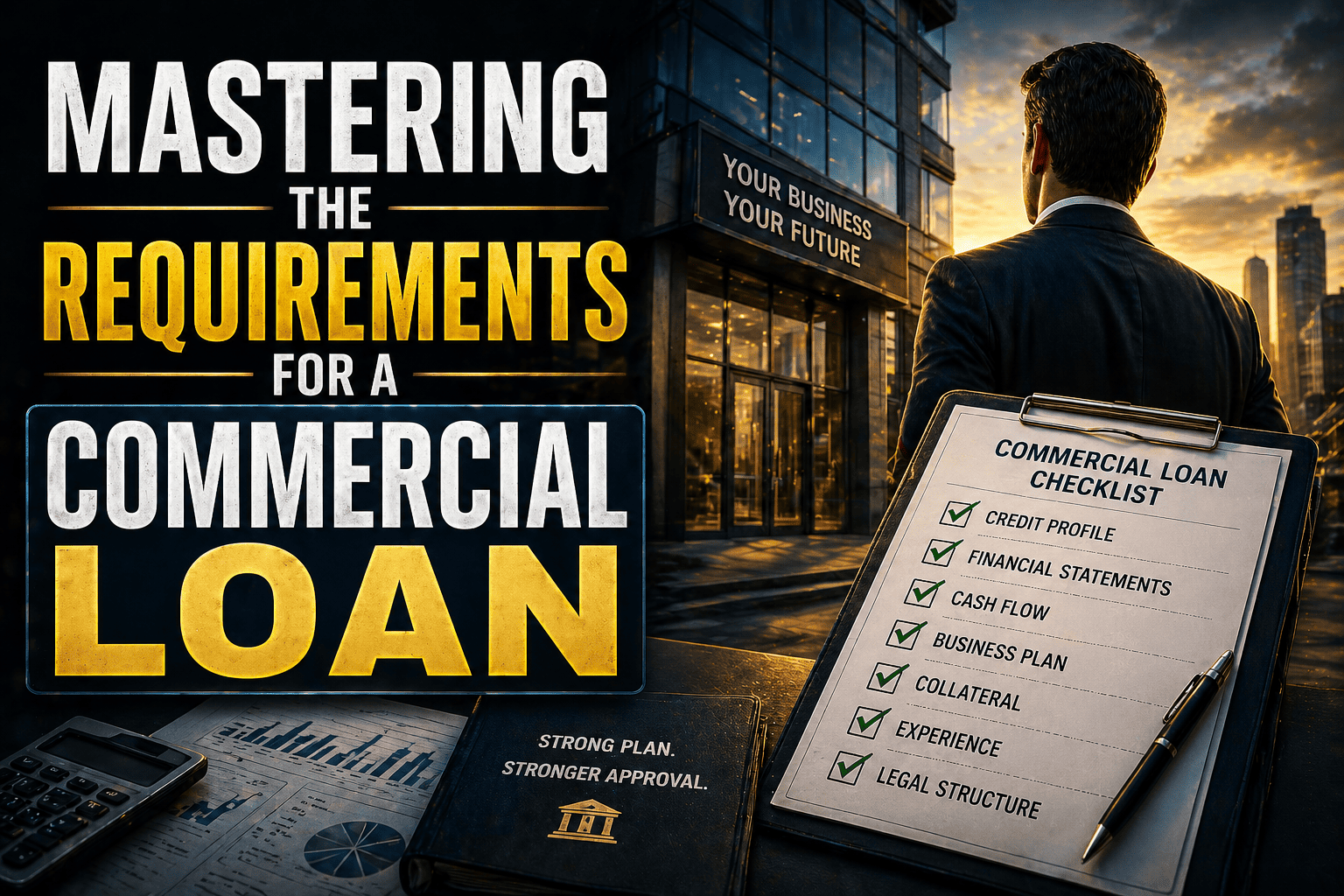
If your business is at this stage, our guide on mastering the requirements for a commercial loan walks through what underwriters look for in more depth.
A commercial loan from Capital One is really meant for established businesses with a solid profit history and the financials to prove it. The lender will scrutinize your past cash flow, future revenue forecasts, and the specific project you want to fund. These are big-money loans — you'll need a solid business plan and substantial collateral to back them up.
Capital One Equipment Financing
In contrast, Capital One equipment financing is a much more straightforward way to get the critical assets you need to operate and grow. This financing is specifically for purchasing the machinery and tools that make your business run. Think a fleet of new delivery trucks, specialized diagnostic machines for a medical practice, or heavy-duty manufacturing equipment.
The secret sauce here? The equipment you're buying typically serves as the collateral for the loan. That's a huge deal.
Hyperlinked this phrase, per audit — it was bolded like a link but went nowhere. Points to your closest existing related guide since a dedicated "business loans with no collateral" page doesn't exist yet.
The loan is secured by a tangible, valuable asset. That means equipment financing can sometimes be easier to get than other types of business loans that typically require collateral. The built-in value of the equipment lowers the lender's risk, which can often translate into better terms for you.
Beyond equipment, Capital One also offers a few specialized commercial products worth knowing about: medical practice financing for physicians and dentists buying into or expanding a practice, and CIRA loans for condominium and homeowners' associations funding major capital projects. Niche, but worth a mention if either applies to you.
This self-collateralizing feature makes the whole process simpler. For instance, a construction firm that needs a new excavator can get financing where that specific piece of machinery is the only thing backing the loan. This frees up the company's other assets and cash for day-to-day operations while still allowing it to boost its capabilities.
Capital One Loan Requirements
Getting a Capital One business loan isn't just about filling out forms. It's about preparation. Lenders piece together a picture of your business's health and reliability. Knowing what they look for before you start can boost your odds of a "yes."
How to Qualify for a Business Loan
While the fine print can change depending on the loan type, the core pillars of what Capital One looks for on a business loan remain consistent. These are the non-negotiables.
- Personal and Business Credit Scores: Your personal credit history is front and center. Aim for a personal score of at least 670. Top-tier products often want 700+. Your business credit score matters too — see our breakdown of credit score requirements for business loans and why business credit vs. personal credit matters for funding.
- Time in Business: Lenders value a proven track record. Most Capital One loans want at least two years of operational history.
- Annual Revenue: You'll need to show consistent cash flow. Have bank statements and tax returns ready to prove you meet the minimum revenue threshold.
Added — independent reviewers consistently flag this as a hard requirement the original draft omitted entirely.
- A Capital One Business Checking Account: This is a qualification requirement, not just a convenience. Capital One generally requires an existing (or newly opened) business checking account before it will fund a loan.
- Personal Guarantee: Own more than 20% of the business? Expect to sign a personal guarantee. That's standard for most commercial and SBA lenders, not unique to Capital One.
The business checking account and personal guarantee are easy to overlook because they don't show up on most generic "how to qualify for a loan" checklists — they're specific to how Capital One structures its lending relationship.
The secret to success is to think like an underwriter. Don't just submit your documents and hope for the best. You need to look at your own financials, anticipate questions, and address potential red flags before they even see them.
This is where tech can give you a serious edge. Platforms like Score Machine run an AI-powered analysis of your credit file. They flag the exact same issues an underwriter would spot before you apply. Our credit readiness tools are built specifically for this pre-application check.
Apply for Capital One Business Loan
The original draft said applicants "reach out, usually online or by talking to a business banker," implying online applications are common. Independent reviewers (NerdWallet, LendingTree, Bankrate) consistently report the opposite: Capital One does not offer online or phone applications for business loans — you must apply in person at one of its roughly 250–750 branch locations, concentrated in a handful of states. This was a real accuracy gap, not just an optimization one. Corrected below with sources.
Here's what surprises a lot of applicants: despite being known as a largely online bank, Capital One requires business loan applications to happen in person. According to independent reviews from NerdWallet and LendingTree, Capital One doesn't offer online or phone applications for business loans. You'll need to visit a branch or Capital One Café and work with a dedicated business banker. Branch locations are limited to a handful of states, so accessibility depends heavily on where your business is located. You can start with an online eligibility form, but the formal loan application itself happens in person.
Once you've done your homework, here's how the process usually unfolds for a small business loan application. Our loan preparation checklist covers the documentation piece in more depth.
Added internal link to your related no-credit guide, giving readers at an earlier stage a next step.
(If you're earlier in your credit-building journey, see our guide on how to get a loan with no credit history.)
- Initial Inquiry and Pre-Qualification: Fill out Capital One's online eligibility form or contact a business banker directly to get a sense of what you might be approved for, typically without a hard credit inquiry. Our guide on getting pre-approved and locking in your funding fast covers this stage in detail.
- Branch Visit and Document Submission: You'll meet with a business banker in person to submit paperwork: tax returns, bank statements, financial reports, and legal documents.
- Underwriting and Review: Capital One's underwriting team will meticulously review everything, run a hard credit check, and assess the overall risk.
- Decision and Offer: If everything checks out, you'll receive a formal loan offer detailing the amount, rate, and terms.
- Funding: Once you've accepted and signed, the funds are typically deposited into your business bank account within a few business days.
Capital One SBA Loans
For businesses that don't neatly fit into the conventional lending mold, a Capital One SBA loan can be a real lifeline. Capital One partners with the U.S. Small Business Administration (SBA), which guarantees a large portion of the loan. That dramatically lowers the risk for the bank.
Named the actual SBA programs — the original draft treated "SBA loans" as one generic bucket, while every competitor specifies these programs by name.
Capital One is an SBA Preferred Lender. That means it can approve certain SBA loans in-house rather than waiting on SBA sign-off, which speeds up funding. Its SBA lineup includes:
- SBA 7(a) loans — the SBA's flagship program, usable for working capital, real estate, equipment, or debt refinancing
- SBA 504 loans — designed specifically for major fixed-asset purchases like real estate or heavy equipment
- SBA Express loans and lines of credit — faster-turnaround SBA financing for smaller amounts
That government backing is what makes these loans so special. It opens the door for businesses that might otherwise get a "no." Because the risk is lower for the bank, they can often offer much better terms too.
- Longer Payback Times: Repayment terms often stretch years longer than a standard bank loan, leading to smaller monthly payments.
- Less Money Down: The SBA guarantee can mean you don't have to provide as large of a down payment.
- Friendlier Approval Standards: Younger companies or businesses in less-traditional industries often have a better shot at qualifying.
These loans are ideal for making big, game-changing investments like buying commercial property, acquiring a competitor, or purchasing major equipment.
Capital One Business Credit Card
On the other side of the coin, you have the Capital One business credit card — a potent tool for daily cash flow and working capital, not just a way to buy office supplies. It gives instant, on-demand financing for the small stuff that keeps your business running, without a lengthy application process.
- Build Your Business Credit: Using a business credit card responsibly is one of the quickest ways to build a strong business credit history. New to this? Start with our guide on how to build business credit from scratch.
- Earn Rewards: Many Capital One cards come with rewards like cash back or travel points.
- Simplify Bookkeeping: Everything is tracked on one simple, itemized statement, making expense management and tax time much easier.
Capital One Business Loan Rates
This is the big one, but Capital One doesn't post a menu of rates or APRs online. Why? Because the rate you get is completely unique to your business. It's a blend of your specific loan type, annual revenue, time in business, and of course, your personal and business credit scores.
A stronger financial profile with a great credit history almost always lands you a more competitive, low interest business loan. If your credit needs work before you apply, see how to build business credit and unlock better funding. SBA loans that Capital One facilitates often have rates tied to SBA guidelines, while a line of credit typically has a variable rate. The only real way to know what you'll be offered is to go through the pre-qualification process.
Business Loans Capital One Review
Domain was wrong: scoremachine.com is a parked GoDaddy resale page, not your site. Corrected to thescoremachine.com.
When you're chasing Capital One business loans, filling out the application is the easy part — getting the "yes" is the real goal. That's where a credit intelligence tool like Score Machine helps. It gives you a pre-flight check of your financial file, spotting the same red flags an underwriter would, so you can fix them before you submit. See how it works before you start your Capital One business loan application.
Best Banks for Small Business Loans
Capital One is often considered one of the best banks for small business loans due to its diverse product offerings and established reputation. However, the "best" bank always depends on your specific needs — if Capital One's two-years-in-business or in-person requirements don't fit your situation, it's worth comparing alternative lenders like Everest Business Funding. When comparing options, consider factors like interest rates, loan terms, customer service, and application requirements.
Capital One Business Banking
Beyond loans, Capital One business banking offers a suite of products, including checking accounts, savings accounts, and merchant services. Integrating your lending with your daily banking can often simplify financial management and may lead to a stronger overall banking relationship.
Frequently Asked Questions
What credit score do I need for a Capital One business loan? Most Capital One small business loans call for a personal credit score of at least 670, though top-tier products often want 700+. Your business credit score is also factored into the decision.
Does Capital One offer SBA loans? Yes. Capital One partners with the U.S. Small Business Administration to offer SBA-backed loans, which typically come with longer repayment terms, lower down payments, and more flexible approval standards than conventional loans.
What's the difference between a Capital One term loan and a line of credit? A term loan gives you a lump sum with a fixed repayment schedule, best for one-time purchases like equipment or real estate. A line of credit is revolving — you draw funds as needed and only pay interest on what you use. That makes it better suited to managing ongoing cash flow.
How long does it take to get approved for a Capital One business loan? Timelines vary by loan type and how quickly you submit documentation. The process generally runs from pre-qualification through underwriting to a funding decision. Funds are typically deposited within a few business days of signing.
Can I get a Capital One business loan with less than two years in business? It's harder, but not impossible — Capital One generally prefers at least two years of operational history for most loan products. Newer businesses may have better luck with an SBA loan or a business credit card, which tend to have more flexible qualification standards.
<!-- [CHANGE per Surfer report] New FAQ entry directly addressing the corrected application-method fact. -->
Can I apply for a Capital One business loan online? Not fully. Capital One doesn't offer online or phone applications for business loans. You can start with an online eligibility check, but the formal application happens in person with a business banker at a branch or Capital One Café.
Does Capital One publish its business loan interest rates? No. Rates are underwritten individually based on loan type, annual revenue, time in business, and credit profile. The only way to know your actual rate is to go through pre-qualification.
Ready to see where your business stands before you apply? Score Machine provides an AI-powered analysis of your credit file, giving you an underwriter's view of your fundability and a clear action plan. Get the insights you need to apply with confidence at https://thescoremachine.com.
About the author
Ali Badi — Contributing Writer Ali Badi is a financial writer at Score Machine, covering credit intelligence, business funding, and loan-readiness guidance.
Read more from Ali Badi on the full author page.
Score Machine is our own credit-intelligence platform, referenced in this article as a tool we build and recommend.